




Commercial
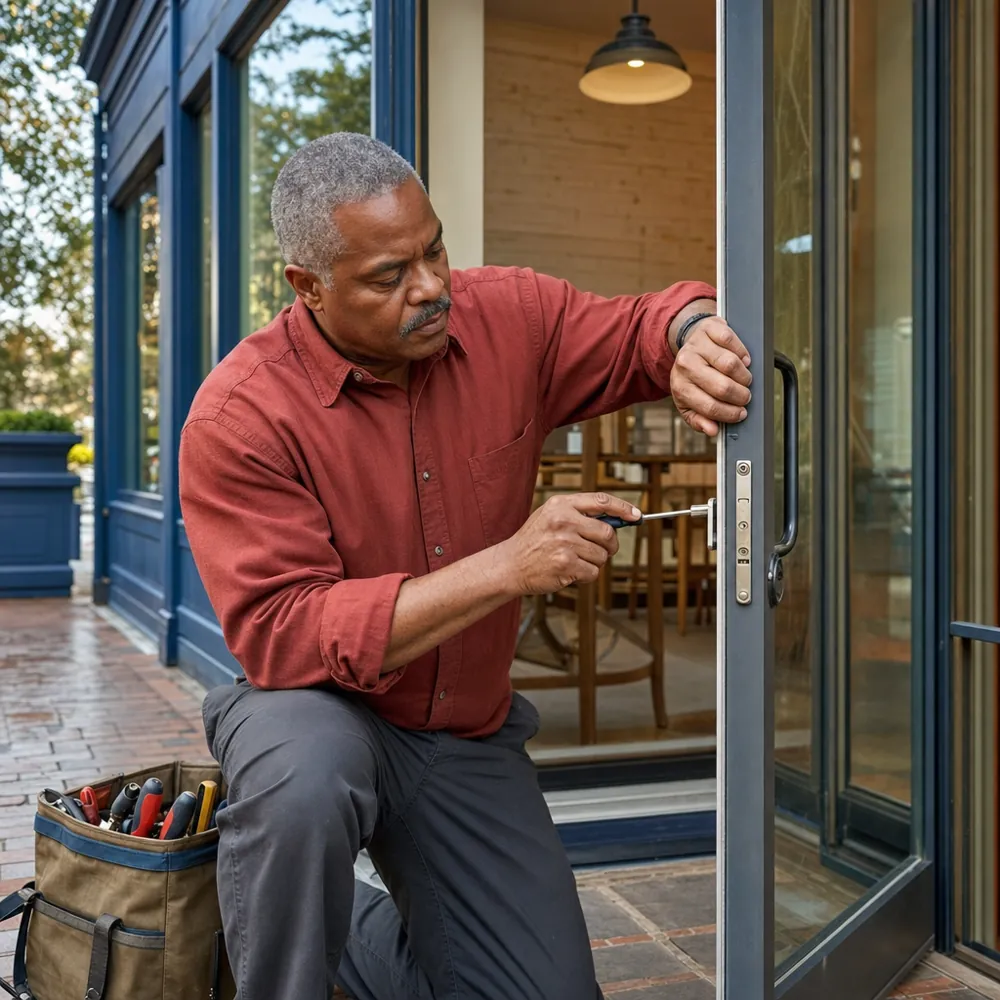
Commercial lock repair, done at your premises
Locks, cylinders and exit devices that stick or fail: we replace the part that wore out, at your premises.

Where
South-eastern Pennsylvania
What we cover
Chester County, Delaware County, Montgomery County, Lancaster County and Philadelphia
How we work
We are a mobile locksmith. We come to you.
What this covers
Commercial lock repair is for business locks that have started to fail: a cylinder that drags or will not turn, a lock body that has worked loose on the door, a latch that no longer catches, or exit hardware that sticks. Business doors open and close all day, and their locks wear faster than any door at home. We find the worn part and replace it at your premises.
How we approach it
We test the lock the way it is used: with the key from outside, with the handle or the push bar from inside, and with the door both open and closed. That separates a worn cylinder from a latch that is out of line and from a door that has shifted. Once the part is replaced, the whole door is tested again, including the way it latches when it swings shut.
Where it stops
Repair suits a lock that is sound apart from the part that failed. When a lock is worn throughout, damaged in a break-in, or so old that its parts are no longer made, replacing it is the better answer. We do not make claims about building or fire requirements for your doors, and a door that has been damaged needs fixing before a lock can work properly on it.
What commercial lock repair covers
Repair locks, cylinders and exit hardware on business premises, replace the part that wore out.
Worth knowing
A sticking lock on a business door is a lockout waiting to happen. When a key has to be worked into the lock every morning, it will eventually refuse to turn, and it will not pick a convenient moment. Treat the first signs, a key that drags or a latch that needs a push, as a repair to schedule rather than something to live with.
Exit hardware needs checking from both sides. A push bar can look fine from inside and still leave the door unlatched after it closes, which means a rear door that looks locked at night is not. After any repair, let the door close on its own and pull on it from outside. If it opens, the latch is not catching.
Lubrication helps a lock only with the right product. Heavy oils and general sprays attract dust and leave a lock stiffer than before; a dry lubricant made for locks is the better choice, used sparingly. When a lock is still stiff after cleaning, the wear is inside, and more lubricant will not bring it back.
Commercial Lock Repair: questions before you call
My storefront key turns partway, then stops in the front deadbolt. What should I tell you on the phone?
Tell us whether the key stops at the same point every time, whether the bolt is already extended or retracted, and whether the door feels tight when you pull on the handle. That changes whether we focus first on the cylinder, the bolt inside the lock, or the door pressure against the strike. One useful detail is if the key comes back out smoothly or feels trapped.
I manage an office with a push bar on the back exit. What changes about the repair on that door?
A push bar door is different because the outside trim, the latch at the edge, and the bar across the inside can each cause the problem. Tell us whether the issue is on entry from outside, on exit from inside, or both. A concrete detail helps, such as whether the latch stays pulled in when the bar is pressed or springs back out.
Before you come, what should I have ready for our loading door lock that sticks after lunch deliveries?
Have someone available who can test the door while we watch the lock, and have any working key for that door ready if one exists. It also helps to know when the sticking happens and what the door was doing just before it started. One clear detail is whether lifting or pulling the door changes how hard the key is to turn.
How can I tell if my jammed office knob lock needs repair or if I really need rekeying instead?
Repair and rekeying solve different problems. Repair is for a lock that binds, spins, will not retract its latch, or has a loose cylinder or lever. Rekeying is for changing which key operates a lock that still moves normally. One simple sign is this: if the correct key goes in but the latch does not move, that points to repair work.
Our suite door has a mortise lock, and the key works from outside but the inside thumbturn feels loose. Does that matter?
It matters because a mortise lock has several connected parts inside one case, and a loose thumbturn can point to wear in the tailpiece or the lock body, not just the cylinder. Tell us whether the thumbturn has resistance, whether it spins farther than before, and whether the latch or deadbolt moves with it. One concrete detail is if the lever still opens the latch while the thumbturn feels slack.
