




Commercial
Panic bars and exit door locks, fitted and repaired
We fit and replace panic bars and exit devices on business doors, and adjust how they latch.

Where
South-eastern Pennsylvania
What we cover
Chester County, Delaware County, Montgomery County, Lancaster County and Philadelphia
How we work
We are a mobile locksmith. We come to you.
What this covers
Panic bar installation fits or replaces the push bar on an exit door: the bar or pad people push to get out, the latch it works, and the trim on the outside. It is the hardware on rear doors, side exits and busy entrances, where people need to leave by pushing rather than turning a knob. We also replace worn or broken exit devices and adjust existing ones.
How we approach it
We check how the door is used and how it closes before fitting anything. The exit device has to suit the door, and its latch has to meet the strike as the door swings shut. After fitting or replacing it, we adjust the latch, test the bar from inside, test the outside trim and key where there is one, and check that the door latches on its own.
Where it stops
We fit and adjust exit hardware; we do not make claims about building or fire requirements, and alarms on exit doors are outside this work. If a door has to meet a particular rule, check it with your landlord or building manager. A door that sags or does not close square needs fixing first, because no exit device latches reliably on a door that does not close properly.
What panic bar installation covers
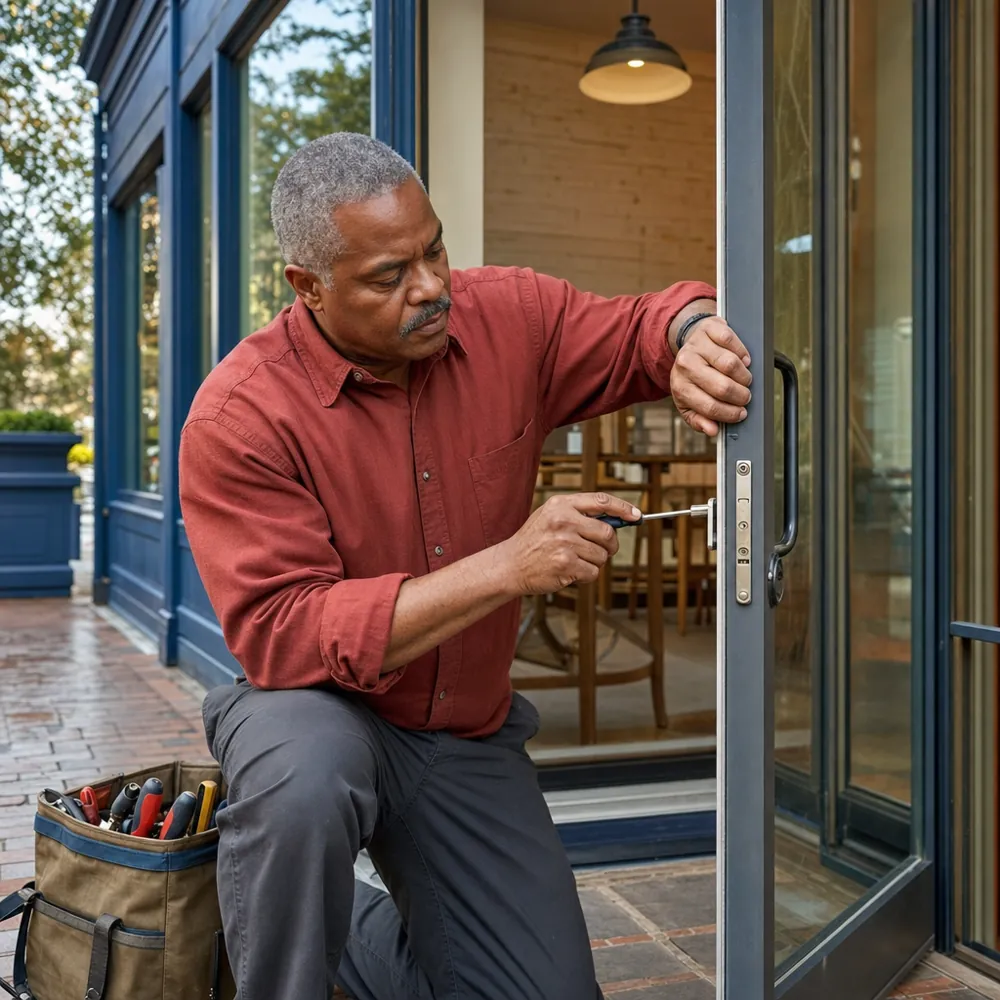
Fit or replace a panic bar or exit device on a business door, adjust it so the door latches.
Worth knowing
A door that looks latched is not always latched. Exit devices wear, and a latch that no longer catches leaves a rear door that anyone can pull open from outside even though it looks closed. At the end of each day, pull on exit doors from the outside. A door that opens has a latch problem, and it is far better found by you than by someone else.
Some exit devices can be held open during business hours, a feature called dogging. It is useful for deliveries and busy periods, and easy to forget at closing time. If your devices can be dogged, make undoing it part of the closing routine, or the door stays unlocked overnight however good the hardware is.
Heavy use shows up first in the latch and the trim. A bar that needs a harder push than before, a latch that clunks, or outside trim that has worked loose are signs of wear. Dealing with them early keeps a busy exit door working and heads off the day it will not latch at all.
Panic Bar Installation: questions before you call
What should I tell you on the phone about my rear steel exit door before a panic bar is installed?
Tell us the door material, whether it is single or double, and what hardware is on it now. One useful detail is whether there is a round knob lock, a lever set, or an old push bar on the door today. That tells us what mounting pattern and latch setup we need to look at when we get to the opening.
What do I need to have ready if I manage a shop and want the stockroom exit fitted with a panic bar?
Have the door available to inspect and clear the area around it so the full swing can be checked. One concrete thing to have ready is the door width, measured straight across from edge to edge. If you know whether the door swings out to the alley or into the stockroom, tell us that too because it changes the exit device setup.
How does the job change if my office back door has glass with a narrow metal frame instead of a solid wood door?
The door construction changes the hardware choices and the mounting points we can use. A narrow stile aluminum and glass door does not take the same panic bar setup as a solid wood slab with a wide face. Tell us if the latch side frame is slim, because that affects whether there is enough surface area for the device and strike placement.
How can I tell whether I need panic bar installation or just an adjustment on our loading door that no longer catches?
Look at what is already on the door and what is failing. If the door already has a push bar and the latch misses the strike by a small amount, that points to adjustment work rather than a first installation. If there is no exit device on the door at all, or the bar body is broken or missing, that points to fitting or replacing the hardware.
What if our restaurant exit door has an alarm on it now and we want a new panic bar fitted?
The alarm matters because we do not work on exit door alarms. We can fit or replace the panic bar itself, but the alarm hardware and its wiring are separate from this job. A concrete detail to tell us is whether there is a surface alarm box mounted above the door, because that helps separate the bar work from the alarm equipment on the opening.
