




Commercial
Door closer installation by a commercial locksmith
We fit and replace door closers and adjust them so the door closes at the right speed and latches.

Where
South-eastern Pennsylvania
What we cover
Chester County, Delaware County, Montgomery County, Lancaster County and Philadelphia
How we work
We are a mobile locksmith. We come to you.
What this covers
Door closer installation fits or replaces the closer at the top of a door, the arm and body that pull the door shut after someone walks through. A working closer brings the door back at a steady speed and lets the latch catch, which helps keep business doors, storefronts and shared entrances closed. We fit new closers, replace worn ones, and adjust closers that slam, drift or leave the door open.
How we approach it
A closer is adjusted in stages: how fast the door swings, how it slows as it nears the frame, and the final push that lets the latch catch. We set each stage for the door and the way it is used, then test the door from different openings with the latch and lock in place. A door that slams, bounces or stops short can be a closer out of adjustment rather than a closer at the end of its life.
Where it stops
Closer work covers the closer, its arm and its adjustment. Automatic door openers are outside it, and so is fixing a door that has sagged or no longer closes square. If a closer has leaked its fluid, adjusting it will not bring the control back, and replacing it is the answer.
What door closer installation covers
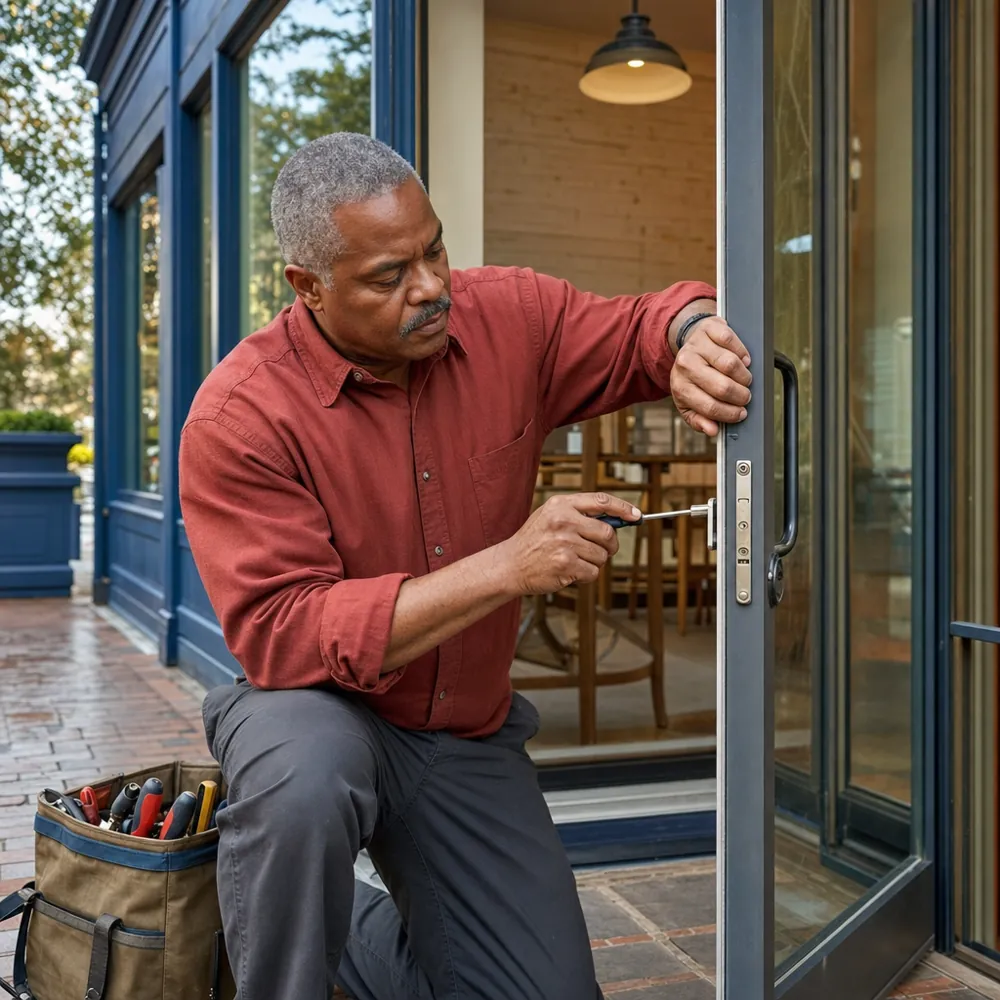
Fit or replace a door closer, adjust how fast the door closes and latches.
Worth knowing
An oil stain under the closer, or on the floor below it, is a sign that the closer is leaking. A leaking closer loses its control: the door starts to slam or swing shut too fast, and eventually stops closing properly. That closer needs replacing rather than adjusting, because the fluid that controlled it is gone.
Seasons affect closers. Cold thickens the fluid inside, so a door can close slowly in winter and too fast in summer. A closer that is right in one season and wrong in another may need adjusting twice a year, which is a small job compared with a door that never latches in January.
A door that does not latch is an open door. On a storefront or a shared entrance, a closer that stops short leaves the door resting against the latch without catching, and the lock does nothing. After a closer is adjusted, walk through the door and let it close on its own: it should latch without a push.
Door Closer Installation: questions before you call
My shop door slams the last few inches. What should I tell you on the phone first?
Tell us whether it is an inside or outside door, what material the door is, and what the closer is doing now. A good detail is whether the arm is mounted across the top on the push side or the pull side. That tells us what closer style is there and whether the problem sounds like speed, latch control, or mounting.
I want a closer added to my office entry door that has never had one. What decides how that job goes?
The main things are the door size, the door material, and where the closer can mount. A hollow aluminum storefront door is different from a solid wood office door because the top rail gives a different mounting area. Tell us if the door swings inward or outward and whether there is glass near the top where the closer would sit.
My apartment building hallway door already has a closer, but it stops short and will not catch. Is that an adjustment or a replacement?
It can be either, and the way the door moves helps sort that out. Tell us whether the door slows down too much near the end or if it reaches the frame and bounces back. One useful detail is whether the latch meets the strike opening cleanly or rubs the frame first, because that points to door alignment versus closer control.
My back door drags at the threshold and also closes too hard. How do I tell if I need a closer job or something else?
Watch which problem happens first as the door moves. If the bottom edge scrapes the threshold before the door reaches the frame, that points to the door hanging low rather than the closer itself. A closer controls swing and closing speed. It does not fix a door that has dropped on its hinges or a frame that is out of line.
My church door has a bar across it for exiting. Does that change the closer installation?
Yes, the exit bar and the closer have to share the same door without getting in each other's way. Tell us if the closer is above the bar now, or if there is no closer yet. One concrete detail that helps is the space between the top of the push bar and the top edge of the door, because that affects where the arm can travel.
