




Residential
Locks and keys for your home, fitted at the door
Deadbolts, cylinders, keys and strikes on your home, worked on at your own door.

Where
South-eastern Pennsylvania
What we cover
Chester County, Delaware County, Montgomery County, Lancaster County and Philadelphia
How we work
We are a mobile locksmith. We come to you.
What this covers
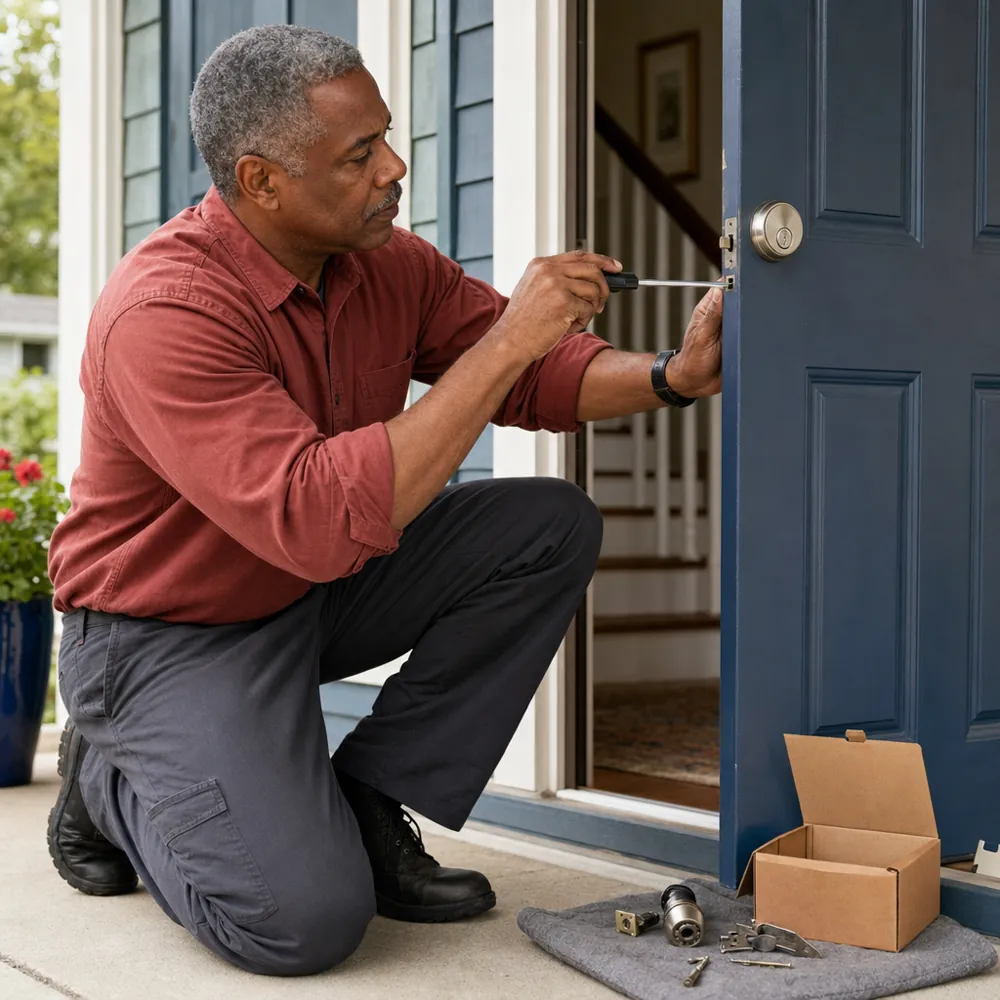
Residential locksmith work is the part of our trade that deals with the locks on a home entry door and the keys that work them. That can mean a door that will not open, a key that turns rough, a deadbolt that is out of line, or hardware that no longer feels solid. It can also mean changing cylinders, replacing worn keys, or making adjustments to the strike, reinforcement plate, and screws that hold the lock in place.
How we approach it
We handle each job the way the door and hardware call for it. Some locks open cleanly, some need careful attention, and some need parts replaced before they can be put back into service. A bored cylindrical lock on one door is not the same as a mortise lock or a rim lock on another, and a loose strike or weak screw holding can change what we do at the door. We come to you and work on the lock where it is mounted.
Where it stops
Our work does not include carpentry on the door, frame, or hinges. We stay with the lock, the cylinder, the deadbolt, the strike, and the related hardware that belongs to the locking setup. If the opening needs woodworking or door fitting, that is outside this service. We handle the lock and its parts, then leave the door hardware at the edge of the work we do.
What residential locksmith covers
Locks, cylinders, deadbolts and keys on a home, the strike and its pocket, reinforcement plates, long screws.
Worth knowing
A door that binds, a key that turns hard, or a deadbolt that catches can point to more than one problem. We look at the lock, cylinder, deadbolt, strike, and screws as separate parts, because the symptom is not always the cause. A loose strike can let the bolt rub the edge of the pocket. Long screws may have pulled out enough to shift the plate. A worn cylinder can make the key drag even when the rest of the hardware is sound. We correct the part that is causing the trouble, not only the part showing it.
That means we do more than open the lock and leave the condition in place. If the strike has moved, we reset the strike and its pocket and fasten it with longer screws so the bolt meets the opening cleanly. If the reinforcement plate is loose, we secure it again so the latch and deadbolt have something firm to hit. If the cylinder is the problem, we work on the lock, cylinder, deadbolt, and key as needed instead of treating a rough turn as a surface issue. The work stays on the hardware that is actually at fault.
The same approach matters when a key is cut for a lock that has worn over time. A fresh key can help, but it will not fix a cylinder that is loose in the door or a deadbolt that is shifted at the strike. We check how the parts sit together, then adjust the lock, the strike, the plate, or the screws that hold them in place. That is the difference between easing one symptom and addressing what caused it. We leave the lock, key, and door aligned around the parts that do the work.
Residential Locksmith: questions before you call
My front door key goes in but only turns halfway from outside. What decides whether this is the key or the lock?
What decides it is the pattern of the problem across every key and every lock on that door. Tell us whether another key does the same thing, whether the inside thumbturn moves freely, and whether the latch opens if you pull the door toward you while turning. A deadbolt that binds only when the door shifts points us toward alignment at the strike.
I just moved into a house, and one key opens the knob but not the deadbolt. Should I ask for rekeying or replacement?
The difference is whether you want the existing hardware kept and changed to a different key, or the keyed part itself changed. Tell us if you want one key for both locks or separate keys, and whether the deadbolt is a separate cylinder above the knob. That detail tells us if the job is changing key access or changing hardware.
My back door deadbolt only locks if I shove the door hard. What should I tell you on the phone?
Tell us exactly which part resists and what pressure changes it. Say whether the key is hard to turn, whether the thumbturn feels tight, and whether the bolt lines up only when you push the door up, down, or inward. If the bolt leaves a shiny rub mark on the strike, that points to alignment at the frame opening.
I’m locked out at my side door, and it has a knob lock plus a separate deadbolt. Which lock details matter most?
The most useful details are what is on the outside of each lock and which one is actually locked. Tell us whether the upper lock is key on the outside with a thumbturn inside, whether the lower knob has a key slot, and whether the storm door is closed over it. A small photo of the outside hardware can clear up which cylinder we are dealing with.
My basement door has an older mortise lock, and the outside cylinder feels loose. What should I have on hand for the visit?
Have every key that has been used on that door in one place, and be ready to say what each key does. Include any key that turns partway, works only from one side, or sticks on the last bit of the turn. On a mortise lock, one worn key that stops short at the same spot can help separate a key issue from a loose cylinder.
Jobs we have done


