




Emergency
Locked out of the house? We come to the door
Locked out of your home: tell us where you are, and before we open the door we ask for something that shows you live there.

Where
South-eastern Pennsylvania
What we cover
Chester County, Delaware County, Montgomery County, Lancaster County and Philadelphia
How we work
We are a mobile locksmith. We come to you.
What this covers
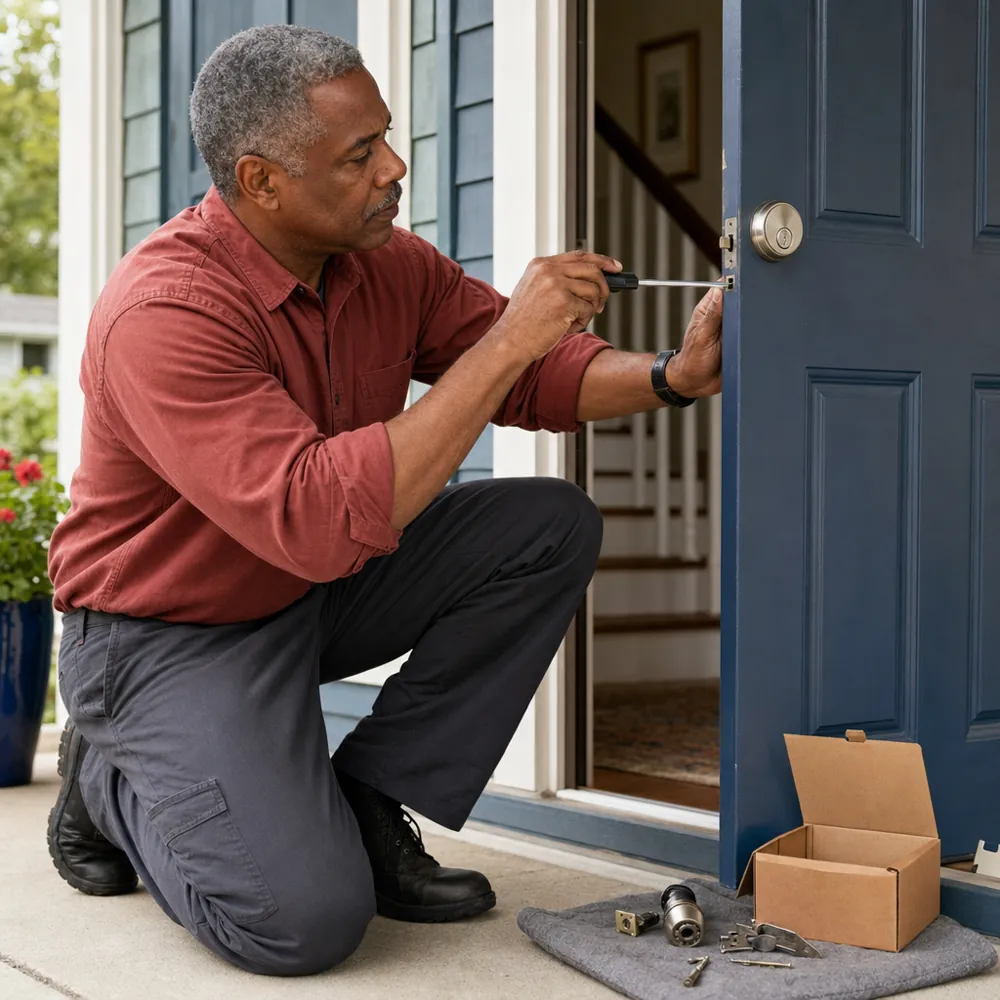
A house lockout means being shut out of your own home: the keys left inside, lost, or broken in the lock, or a lock that will not open with the key you have. We come to the house to open the door for the person who lives there. Before anything is opened, we ask for something that shows the home is yours, such as a photo ID with the address.
How we approach it
Three details shape the job: the address and how to reach the door, the kind of lock on it (a knob or lever, a deadbolt, both, or a keypad), and whether the keys are inside or lost. If the keys are lost and could be tied to your address, you may want the locks rekeyed or changed once the door is open.
Where it stops
A house lockout covers opening the door. If someone inside needs help, a child is alone inside, or something is left on the stove, call 911 first: emergency services can enter a home when someone is in danger. Damage to a door from earlier attempts to force it needs fixing separately before the lock can do its job again.
What house lockouts covers
Get a homeowner back into their home when they are locked out.
Worth knowing
Before you call anyone, walk around the house. Back doors, side doors and sliding doors are easy to forget from the front step, and one of them may be unlocked. Do not climb to an upper window or break glass: the injury or the repair is worse than the lockout.
Think about who already has a key: a partner, a family member, a neighbor, a house sitter, or your landlord if you rent. One phone call may be all it takes. If you rent, your lease may also say that the landlord has to be told before anyone works on the locks.
Plan the next lockout away. Leave a spare with someone nearby rather than under the mat, where anyone would look first. A keypad lock removes the problem of a forgotten key altogether, and a habit of keys in hand before the door closes catches the rest. Doors that lock themselves when they close are the ones that catch people off guard.
House Lockouts: questions before you call
My front door key turns a little and stops. What should I tell you before you come?
Tell us which door it is, what the key does, and whether there is more than one lock on that door. That tells us whether the problem is at the knob lock, the deadbolt, or both. One useful detail is whether the key stops at the same point every time or feels loose first, because that changes how we approach the opening.
I locked myself out of the apartment side door. What should I have with me outside?
Have any working key you do have for that door, even if it only works partway, and keep your phone with you. A key that enters but does not finish turning can still tell us whether we are dealing with the right lock on that entrance. Also, clear the area right at the threshold so we can work at the lock and door edge.
My back door has a knob lock and a separate deadbolt. Which lock matters more for getting in?
The lock that is actually securing the door matters more, and on a two lock door that can be either one or both. Tell us whether the knob was locked, the deadbolt was locked, or you are not sure. One concrete thing to check from outside is whether the keyhole for the upper lock is above the knob by several inches, which tells us you have two separate lock bodies.
I’m locked out of a house with an old mortise lock on the main door. How is that different?
A mortise lock changes the job because the latch and bolt are part of one lock case inside the door, not two separate pieces bored through it. Tell us if the keyhole sits in a long rectangular plate under the handle, because that is a clear outside sign. That layout affects which part of the lock is holding the door shut.
I shut myself out on the porch. How can I tell if this is a lockout or a stuck door?
You can tell by what the key and handle do from outside. If the key turns fully or the outside knob moves as it should, but the door still will not open, say that first. One concrete detail is whether the door opens inward and stops after an inch or two, because that points to the door binding or catching rather than the lock staying set.
