




Clifton Heights
Locks and keys for a Clifton Heights business? We come to you
Cylinders, master keys and exit hardware on business doors, worked on at your premises.

Where
Clifton Heights
What we cover
Delaware County, Pennsylvania
How we work
We are a mobile locksmith. We come to you.
The call
When a business in Clifton Heights calls, the lock problem usually has already gone through a few tries. A key may turn partway and stop, the cylinder may feel tight, or the exit hardware may not release as expected. We ask about the lock type, the door, and whether the key is worn, bent, or newly cut. That first call gives us the shape of the job before we come to you, so we can match the work to a rim lock, mortise lock, bored cylindrical lock, master key system, or exit hardware.
What we check first
Before we touch anything, we look at the hardware and the way it is mounted. We check the cylinder, the keyway, the latch, the bolt, and the exit device so we know what is holding things up. On a business door in Clifton Heights, that matters because one part can be worn while another part is still sound. A master key issue, a sticky cylinder, or a loose exit trim all call for different handling, and the first check tells us which parts need adjustment and which ones do not.
The work itself
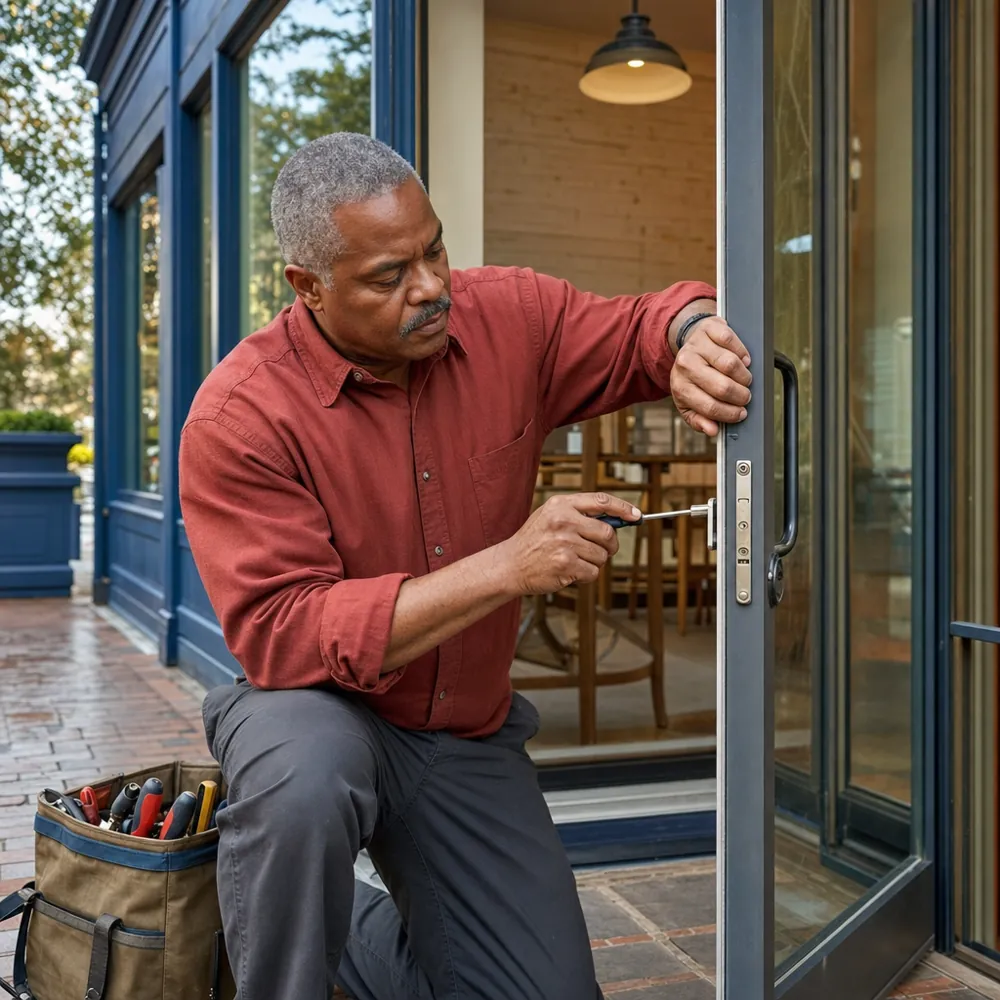
At the door, we work on the lock itself, not the surrounding wood or metal. We open the lock, then remove, reset, or replace the cylinder, rekey the plug, adjust the master key cuts, or service the exit hardware as needed. If a mortise lock is binding, we address the internal parts and the cylinder fit. If a bored cylindrical lock is the issue, we focus on the knob or lever set, the latch, and the keyed side. In Clifton Heights, the work stays on the hardware.
What changes afterwards
Once the work is finished, the change is in the hardware, not in the door itself. A new cylinder may be set in place, a master key change may alter which keys operate it, or the exit hardware may be adjusted so the latch and trim move with less resistance. That means the lock now has different internal parts or a different key relationship than before. On a commercial lock in Clifton Heights, the cylinder, key, and exit hardware are the pieces that carry the change.
About Clifton Heights
Clifton Heights has Baltimore Avenue and Springfield Road as main thoroughfares that intersect near the borough center.
Commercial Locksmith, in short
Locks, cylinders, master keys and exit hardware on business premises.

Worth knowing
A worn key, a rough duplicate, or a cylinder full of grit can send the same lock back to the same trouble. The key cuts round off the pins, the plug starts dragging, and the latch may stop turning cleanly. We open the lock, pull the cylinder, inspect the plug, tailpiece, and retaining screw, then clean out the shell and reset any loose spring parts. If the key is the cause, we fit a better cut and check the cylinder against the mortise or bored lock so the same wear does not keep building on the same parts.
Exit hardware comes back with the same complaint when the bar is loose, the latch dog is left set, or the fasteners work loose from repeated use. The trim, latch, and touch bar take a lot of force, so a bent rod, worn pivot, or dragging latch bolt can make the problem return after a few openings. We open the device, tighten the mounting hardware, reset the latch assembly, and check the spindle, trim, and strike alignment on the door. In Clifton Heights, that kind of repeat trouble usually comes from worn parts left in place and not checked as a set.
Master key work brings repeat problems when the cylinder is pinned around a weak core, the control key cuts are off, or someone keeps forcing a key that does not belong in that lock. A master key system depends on clean cuts and matching parts inside the cylinder, not on a plug that is already worn or a key that has been copied too many times. We open the lock, remove the cylinder, inspect the pins, springs, plug, and cam, then reset the keying so the master and change keys stop fighting the same worn pieces.
Jobs we have done


Questions
My rear office door key turns halfway in Clifton Heights; will you check the cylinder or just replace it?
We can check the cylinder first and see whether the key, cylinder, or worn parts are causing the bind. If the cylinder is the issue, we can service or replace that part. If the door uses a rim, mortise, or bored cylindrical lock, we match the work to that setup.
I need a master key for the suite doors, but one tenant key sticks in the lock; what do you look at?
We look at the lock condition, the key cuts, and how the cylinders are set up before making a master key plan. A sticking tenant key can point to wear inside the cylinder or a mismatch in the key pattern. We handle master keys for business premises and keep the work tied to the existing hardware.
The exit hardware on my side door is loose, and the latch does not always catch; what gets checked first?
We check the exit hardware movement, the latch action, and the cylinder alignment first. Loose hardware can keep the door from closing the same way every time, so we look for worn screws, shifted parts, or a lock body that needs service. We work on exit hardware on business doors, including rim, mortise, and bored cylindrical setups.
My office key sticks in our old storefront door, but the new suite door feels different. What changes for you?
The old door usually shows wear in the lock body, cylinder, and key before the newer one does. On a newer door, the same trouble may point more to the cylinder or the exit hardware. We look at how the lock is set up on that door, then open it and adjust the parts that match the problem.
My back exit latch on this older building drags, while the newer side door still turns cleanly. What does that tell you?
It often tells us the older building has more wear in the latch, cylinder, and key path, so the lock may need different parts than the newer door. A newer door can hide a similar issue in a smaller part, while an older one may need the full lock checked. We open it and work from there.