




Colerain Township
Locks and keys for a Colerain Township business? We come to you
Cylinders, master keys and exit hardware on business doors, worked on at your premises.

Where
Colerain Township
What we cover
Lancaster County, Pennsylvania
How we work
We are a mobile locksmith. We come to you.
The call
A locked storefront, office, or service door in Colerain Township can bring a call after a key sticks, a master key stops turning, or an exit device leaves the lock in an odd position. The caller has usually tried the key again, checked for a bent blade, and looked at the latch or lever before reaching us. We listen for what kind of hardware is in place and whether the issue is in the cylinder, the lock body, or the exit hardware on the door.
What we check first
Before we touch anything, we check the lock type, the mounting, and how the key enters the cylinder. On a commercial door in Colerain Township, that first look decides whether the problem sits in a rim cylinder, a mortise cylinder, a bored cylindrical lock, or the master key setup tied to it. We also check the exit hardware for binding or misalignment at the lock body. That tells us where the work belongs and what parts need attention.
The work itself
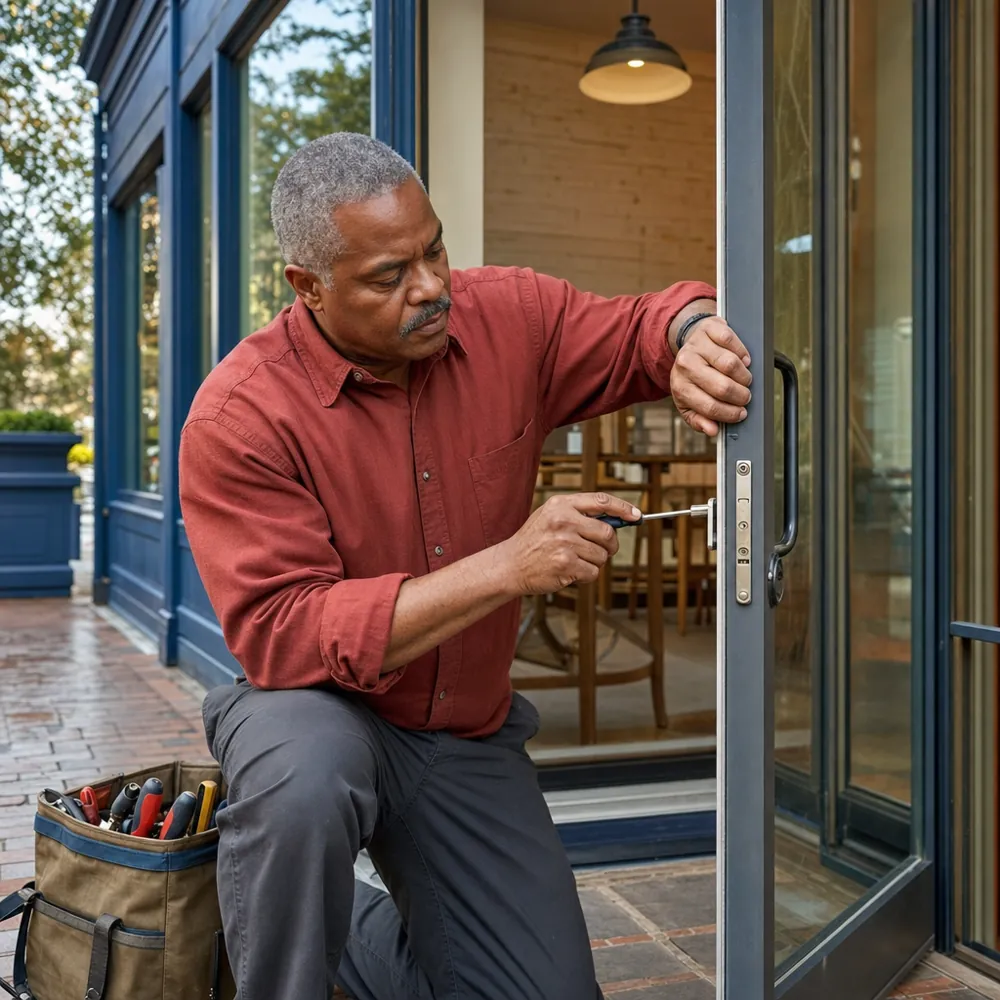
At the door, we open the lock and work on the hardware that is causing the trouble. A rim cylinder may need to be removed and reset, a mortise cylinder may need to be changed out, or a bored cylindrical lock may need adjustment at the core and trim. If the key is worn, we compare it against the lock and the master key system. In Colerain Township, we keep the work on the lock, the cylinder, and the exit hardware itself.
What changes afterwards
When the work is complete, the new part is the cylinder or key blank cut for that lock, while the adjusted part is the lock body, master key relation, or exit hardware fit at the door. That changes how the key enters, how the cylinder turns, and how the lock responds under use. A rim lock may have a fresh cylinder set in place, while a mortise lock may have a reset tailpiece or cam. The hardware sits differently at the lock face.
Commercial Locksmith, in short
Locks, cylinders, master keys and exit hardware on business premises.

Worth knowing
A lot of people start by spraying oil into the keyway, then jiggling a worn key and leaning harder on the knob or lever. That usually pushes grit deeper into the cylinder, and a key that already has rounded cuts can start dragging on the warding and scraping the plug as it turns. When the key is bent or the bow is cracked, people keep working it until the broken edge is what stays in the lock. On a mortise lock or bored cylindrical lock in Colerain Township, that kind of force can also distort the spindle or trim ring.
On exit hardware, the first impulse is often to keep pressing the bar, hold the latch back, or tie the door in place so the lock seems easier to deal with. That can shift the latch bolt, bend the dogging parts, or leave the actuator sitting partly engaged. Once that happens, the cover has to come off and the parts have to be put back in their proper positions before the lock can be opened. On a rim device, a loose fastener or a twisted latch face can make the whole assembly bind against the strike.
People also try to take apart the cylinder or swap the core themselves after the key starts sticking. They pull the retainer, drop small screws, and then reassemble the shell with the tailpiece off center or the cam turned the wrong way. On master keyed hardware, mixing the pins, plugs, or follower pieces changes the stack inside the cylinder and can turn a simple service call into a teardown. That is where a lock that once turned with a little drag ends up with a seized plug and damaged keyway.
Jobs we have done


Questions
If my front office mortise lock key turns rough, do you rekey it or replace the cylinder?
We look at the cylinder first, then decide whether rekeying or replacement fits the lock. A rough turn can come from wear inside the cylinder, a bent key, or damage after use. We can also match it to the rest of your keys if the building uses a master key setup.
On my rear exit bar, what changes when the latch keeps sticking after it’s closed?
We check the exit hardware for wear, misalignment, and broken parts at the latch point. A sticking latch can come from the lock body, the trim, or the bar itself. We can adjust or replace the worn piece so the door latches cleanly and the hardware moves the way it should.
For the side door at my shop, can you make one key work on several locks?
We can set up a master key system for several locks on the same property. That lets different doors keep their own keys while one key opens the group you want. We plan the cylinder changes around the locks already in place, including rim, mortise, and bored cylindrical hardware.
When my back office door key snapped, what usually surprises people about that kind of commercial lock job?
The part that surprises people is how much time goes into reading the lock and the broken key together before anything is turned. Many expect a fast twist or a quick part swap, but we look at the cylinder, the key fragment, and the door hardware as one system before we open the lock.
When my storefront mortise lock started sticking, what do people expect us to do first, and what catches them off guard?
People often expect us to go straight to the latch, but the first surprise is that we check how the key, cylinder, and trim are working together. A sticky mortise lock can come from wear in more than one place, and the fix starts with that whole setup, not just the part that feels tight.