




Ephrata Township
Locks and keys for a Ephrata Township business? We come to you
Cylinders, master keys and exit hardware on business doors, worked on at your premises.

Where
Ephrata Township
What we cover
Lancaster County, Pennsylvania
How we work
We are a mobile locksmith. We come to you.
The call
A locked storefront, office, or service door in Ephrata Township often reaches us after a key sticks, a cylinder turns hard, or exit hardware will not release cleanly. The caller has usually tried the working key, checked for an obvious latch hold, and gone through the same motion a few times before it stopped helping. We come to you in Ephrata Township and look at the commercial lock work on site, because the first signs on the hardware tell us how the rest of the job needs to go.
What we check first
Before touching anything, we check the lock body, cylinder, keyway, and the exit hardware linked to the door. We look for wear in the key edge, play in the plug, and past adjustments that changed how the parts meet. On a mortise lock, rim lock, or bored cylindrical lock, that first inspection decides whether the work stays with the cylinder, moves to the key, or needs both. In Ephrata Township, that matters because the wrong move can turn a small lock issue into a larger one.
The work itself
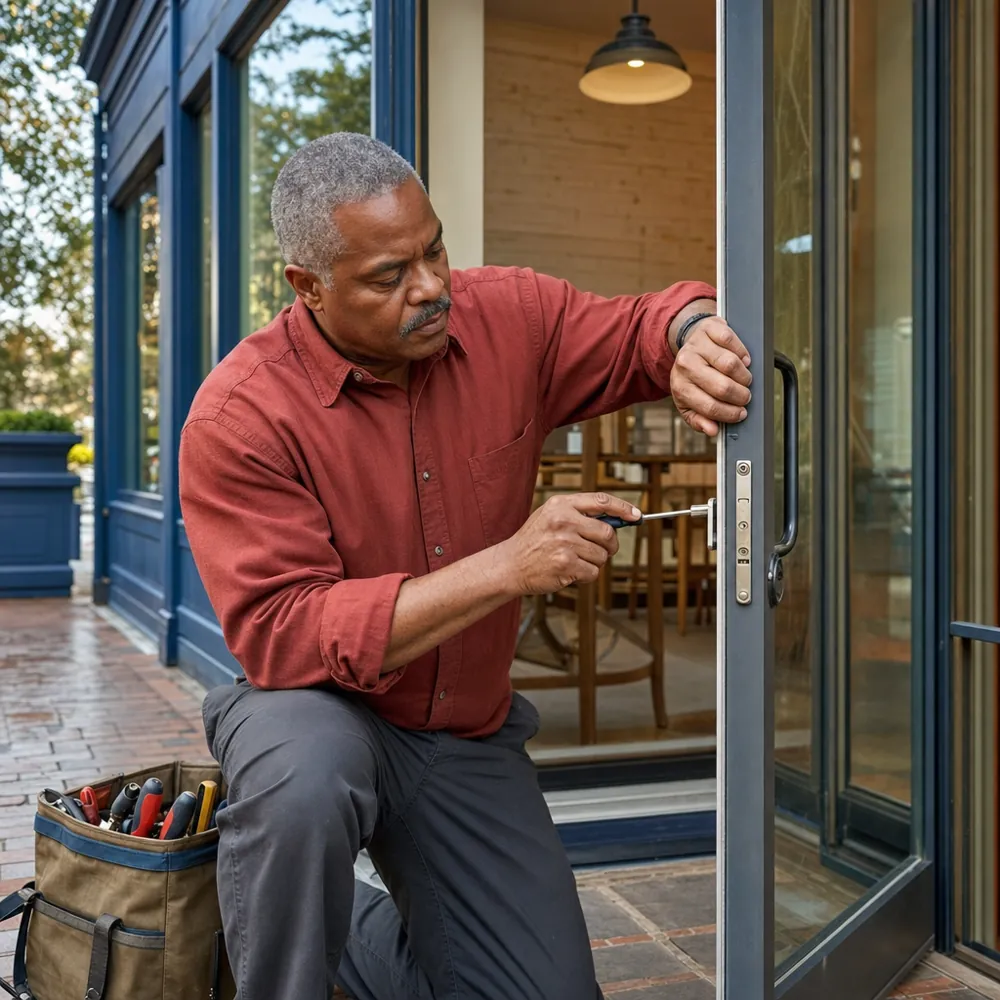
At the door, we work the lock open, then separate the parts enough to see what is binding and what is simply out of place. We remove the cylinder if that is the right point of access, adjust the latch or trim where the lock body depends on it, and reset the master key side if that is what the hardware uses. On exit hardware, we check the linkage and strike contact. Near Ephrata, that means the lock and the hardware are handled as one set, not as separate problems.
What changes afterwards
After the work, the changed part is usually the cylinder or the key side of it, while the adjusted part is the latch, the plug relation, or the master key setup inside the lock. That changes how the key enters, how the turn feels, and how the lock body responds at the door. A commercial rim or mortise lock in Ephrata Township may now move with less drag, while the exit hardware releases with a cleaner push. The lock, key, and hardware are left matched to one another.
About Ephrata Township
Ephrata Township contains historic covered bridges and several farm properties listed on the National Register of Historic Places.
Commercial Locksmith, in short
Locks, cylinders, master keys and exit hardware on business premises.

Worth knowing
A stuck key in a business mortise lock usually gets a few tries before we see it. People twist harder, pull on the key, add graphite, or spray whatever is nearby into the keyway. That can push broken bits deeper, pack dust against the plug, and coat the cylinder so the key drags instead of turning. A bent key can also scrape the inside of the keyway and leave burrs that catch every new key. By the time we open the lock, the parts inside are often loaded with debris and worn from force.
With a master key system, the first instinct is often to compare keys and try every one in the bunch. That can leave the wrong key partly turned in the cylinder, with the plug sitting in a stressed position while someone keeps jiggling the bow. If a key is trimmed or copied badly, its shoulders and cuts can chew up the warding and make the next correct key feel wrong. In Ephrata Township, we also see people pull on a key while turning the knob, which puts side load on the cylinder and makes the lock bind harder.
Exit hardware gets the same treatment when it feels stiff. People push the panic bar, lift the latch lever, or hold the door against the latch while working the trim from the outside, which can shift the latchbolt and keep the mechanism half set. On rim and bored cylindrical devices, that leaves the latch assembly hanging in the strike instead of moving cleanly. Once the internal parts are forced out of their normal travel, the lock opens with more drag, and the cylinder, latch, and exit trim all have to be checked together.
Jobs we have done


Questions
My side entrance key sticks and turns rough in Ephrata Township; do you look at the cylinder or replace it?
We look at the cylinder first, then decide whether cleaning, repair, or replacement makes sense. A rough-turning key can point to wear inside the lock, a damaged key, or a cylinder that is out of line. We also check whether the key is cutting down the lock body or leaving drag on the latch.
I need one master key for our office doors and storage room; how do you set that up?
We build the system around the locks already on the doors and the keys you want to control. We can rekey matching cylinders so one master key opens the group while separate keys still work as needed. That lets us organize access without changing every piece of hardware on the doors.
The exit bar on our rear door drags and feels loose when people push it; what do you check first?
We check the exit hardware mounting, the latch action, and the condition of the cylinder or trim around it. A loose bar can come from worn parts, loose fasteners, or a binding latch that needs adjustment. We keep the focus on the hardware itself so the door can be used the way it was set up to work.
After our office door lock stuck again, what usually brings that back later?
Wear in the key, cylinder, or latch side can bring the same trouble back. If the key is bent, the cylinder is worn, or the lock is getting bound by dirt and old use, the problem returns. We look at the lock, replace worn cylinders when needed, and set up the key and hardware so they line up cleanly.
After we had new keys made for the back door, what stops that same key issue from coming back?
Using a worn copy is what usually brings it back. A fresh key cut from a sound original, along with a cylinder that is not already worn inside, helps prevent repeat trouble. We check the key and the lock together, then make the key work with the cylinder and the door hardware without extra strain.