




Penn Township, Lancaster County
Locks and keys for a Penn Township business? We come to you
Cylinders, master keys and exit hardware on business doors, worked on at your premises.

Where
Penn Township, Lancaster County
What we cover
Lancaster County, Pennsylvania
How we work
We are a mobile locksmith. We come to you.
The call
A call about a commercial lock in Penn Township usually starts after a key binds in a cylinder, a master key stops turning one side of the building, or exit hardware will not latch the way it should. The caller has often already tried a spare key, checked the door closer, or worked the key more than once before the lock gives the same trouble again. We listen for whether the issue is at a rim lock, mortise lock, or bored cylindrical lock and come to you with that in mind.
What we check first
Before we touch anything, we check the door alignment, the lockset type, the cylinder condition, and how the exit hardware is sitting on the door. That tells us whether the problem is in the key, the cylinder, or the lock body itself. On a commercial door in Penn Township, a weak return in the lever or a loose trim can point to one path, while a cylinder that turns rough points to another. That first look decides how we approach the hardware and what we leave alone.
The work itself
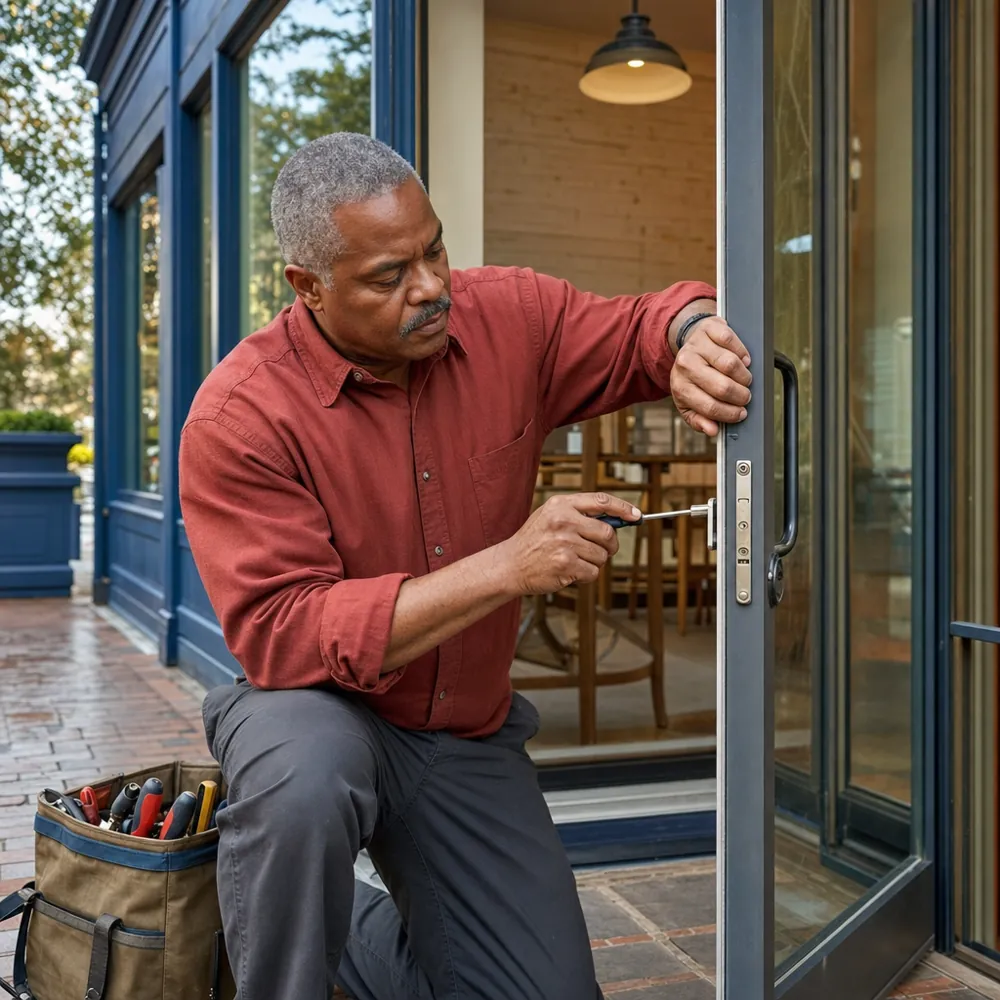
At the door, we open the lock, remove the cylinder if that is the right part to work on, and set the hardware aside for inspection. If the job is a master key issue, we check the cylinder and keying against the rest of the lock group. If it is exit hardware, we watch the latch, the trim, and the release point as we work through it. On a commercial opening near Ephrata, the work stays focused on the lock, the key, and the door hardware.
What changes afterwards
When the work is finished, the changed part is clear: a cylinder may be rekeyed or replaced, a master key pattern may be reset, or a latch assembly in the exit hardware may be adjusted. The worn keyway and the tightened set screws are not the same as they were when we started. In Penn Township, that changes how the key enters, how the cylinder turns, and how the lock body reacts at the door. The hardware is no longer set the same way.
Commercial Locksmith, in short
Locks, cylinders, master keys and exit hardware on business premises.

Worth knowing
People often start by putting a little more force on the key, turning it back and forth while wiggling the door handle. That can twist a worn key, round off the blade, or snap the end off in the cylinder. Others spray whatever oil is close at hand into the keyway, which coats the pins and plug and turns dust into paste. On a mortise lock or bored cylindrical lock, that buildup makes the parts drag more, not less, and a key that was binding now hangs up deeper in the cylinder.
At a business in Penn Township, the next attempt is often to remove the lock and look for the problem from the inside. A faceplate comes off, screws are backed out, and the cylinder or latch is pulled apart on the door. That can leave the tailpiece, set screw, and cam out of line when the parts go back together. A master key system makes it worse if the wrong cylinder is swapped or the control pieces are mixed up, because one small change can affect more than one door and leave the lock set in a harder state than before.
With exit hardware, people also try the push bar, latch, and trim over and over, hoping the bolts will clear on their own. The bar can flex, the latch can sit half-thrown, and the dogging parts can stay loaded while someone keeps forcing the opening. On a rim exit device or mortise exit lock, that pressure can chew up the latch nose and leave the strike marked, so the door feels tighter each time it is tested. What started as a sticking latch turns into a set of parts that do not line up cleanly with the door
Jobs we have done


Questions
My office suite key turns hard in the mortise lock after lunch; what do you check first?
We check the key, the cylinder, and the way the latch moves in the door. A hard turn can come from wear, buildup, or a cylinder that is starting to bind. We can open the lock, repair or replace the cylinder, and set the keying so it matches the rest of the door hardware.
I lost the master key for our back entrance, and the bored cylindrical lock still has the old keyway; what happens next?
We rekey the lock so the missing key no longer works and set it to a new key. If the cylinder is worn or the keyway is damaged, we can replace the cylinder instead. We also check that the new key works smoothly with the door’s latch and trim.
The exit hardware on our shop door sticks when people push it; do you replace the whole bar or just the lock side?
We look at the hardware first and replace only the part that is worn or broken when that is the right fix. Sometimes the exit device needs a new cylinder or latch parts, and sometimes the whole unit needs to be changed. We open the door, test the movement, and reset the lock hardware on the door.
I replaced the key on my office door, but the latch still sticks; are you looking at the lock or just the key?
We look at both, because a key that wears down and a lock that drags can create the same trouble. We check what changed the fit, not only the part that seems worst. That lets us correct the cause instead of leaving the same sticking, binding, or misalignment behind in the lock and key.
My rear entry lock was forced once and now the key turns rough; do you fix what was bent inside?
We do, because rough turning can come from a damaged cylinder, loose hardware, or a key that no longer matches the lock well. We sort out which part is creating the resistance and address that part first, so the problem is not just hidden for the next time you use the key.