




West Grove
Locks and keys for a West Grove business? We come to you
Cylinders, master keys and exit hardware on business doors, worked on at your premises.

Where
West Grove
What we cover
Chester County, Pennsylvania
How we work
We are a mobile locksmith. We come to you.
The call
A locked storefront, office suite, or back entry in West Grove usually reaches us after a key sticks, a cylinder turns rough, or exit hardware stops moving cleanly. The caller has often already tried the copy on hand, checked for a bent key, and made sure the latch is not being held by the door itself. We listen for the hardware type, the side of the opening, and whether the lock is rim, mortise, or bored cylindrical so we know what we are facing before we come out.
What we check first
Before we touch anything, we look at the keyway, the face of the lock, the cylinder movement, and the exit device or trim around it. That first check tells us whether the trouble is in the cylinder, the latch, the lock body, or the key itself. In West Grove, that matters because commercial hardware can fail in different ways, and the wrong approach can turn a simple service into a larger teardown. We decide the work from the hardware in front of us, not from guesswork.
The work itself
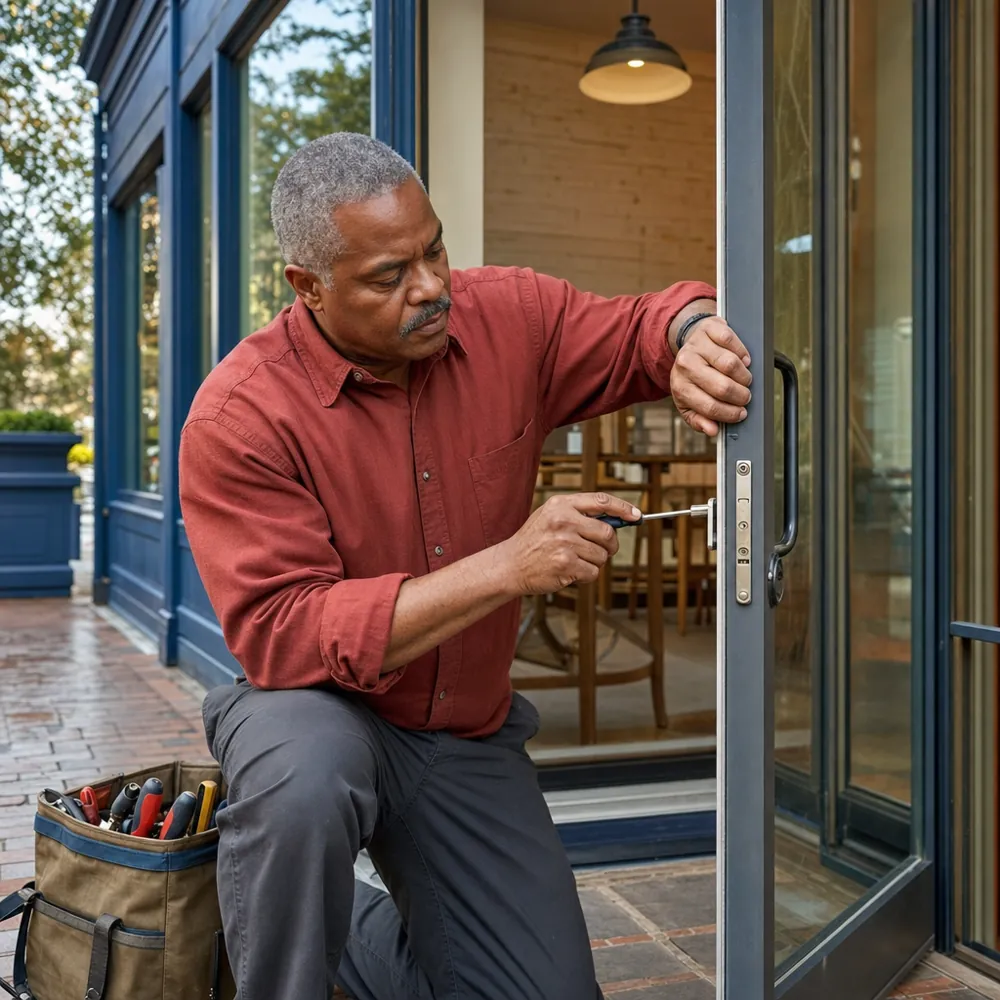
At the door, we open the lock, remove the cylinder if that is the right step, and work on the hardware in place or after removal, depending on how the case is built. We adjust the parts that control turning and latching, reset loose or shifted pieces, and make sure the key and cylinder are matched to the lock body. On an exit device, we check the trim, the latch, and the return movement. In West Grove and nearby Coatesville, the work stays on the commercial hardware.
What changes afterwards
When the work is finished, the changed part is the cylinder or keying, and the adjusted part is the lock body, latch, or exit hardware that governs movement. A worn cylinder can be replaced, a damaged key can be set aside, and a loose function inside the lock can be brought back into line with the rest of the case. That leaves a different feel at the keyway and a different movement in the bolt or latch, with the hardware set for the next turn.

Commercial Locksmith, in short
Locks, cylinders, master keys and exit hardware on business premises.

Worth knowing
A sticky lock usually gets sprayed first, and that can make the problem worse. Oil and heavy lubricants gather dust inside a rim, mortise, or bored cylindrical cylinder, then the key drags through the grit instead of sliding past it. A bent key makes it harder still, because the cut edges scrape the plug and can leave brass shavings behind. We also see broken key pieces pushed deeper with a pick or screwdriver, which can block the keyway and turn a simple cylinder issue into a lock that needs more careful work at the door.
With a master key system, people often try to sort the problem by swapping keys from one door to another or forcing a key that almost fits. That can twist a worn bow, round off the cuts, and leave the cylinder sticking in one position. Some try taking out the faceplate screws on the lock case or the cylinder retainer and then guessing at the tailpiece or cam position on the reassembly. Once those parts are out of place, the problem stops being the key and becomes the whole lock set.
Exit hardware gets its share of home repairs too. The bar is pressed, the latch dog is taped down, or the cover is removed so someone can “see what is inside.” That usually leaves the latch, dogging part, or trim parts hanging in the wrong position, and the door will not read the same when we get there in West Grove. A loose actuator or mis-set spindle can make the panic device feel jammed even when the real issue is farther inside the mechanism, at the exit hardware.
Jobs we have done


Questions
My office suite master key only turns partway now; what do you check first on that lock?
We check the cylinder, the key, and the way the lock is mounted in the door. A master key issue can come from wear inside the cylinder or a problem with the key itself. We look for binding, looseness, and damage before we decide whether the cylinder needs repair or replacement.
The panic bar on my rear exit door sticks when I press it; what kind of repair do you do?
We check the exit hardware for worn parts, loose fasteners, and anything inside the latch case that is keeping it from moving cleanly. If the problem is in the hardware itself, we repair or replace the affected part and test the door again at the lock and latch.
I have a mortise lock on my storefront door, and the key is hard to turn after closing up.
We look at the mortise lock body, the cylinder, and the key to see where the drag starts. A hard turn can come from wear, dirt, or an internal part that is not moving freely. We service the lock at the door and adjust the cylinder as needed.
I had one office key turn fine, but the side door cylinder feels stuck; what makes one job simple and the other awkward?
The simple one is usually a clean, ordinary lock with a key that still matches the cylinder well. The awkward one is the lock that is worn, jammed, or partly broken inside, especially when the key only moves partway. That changes the work at the cylinder and can make the opening or repair less direct.
I lost the master key for our storefront and the exit hardware is acting up; why is one of those easier than the other?
The easier job is a single lock with one clear issue, like a cylinder that just needs to be opened and addressed. The harder job is a master key or exit hardware problem with several parts involved, because we have to sort out how each piece is working together. That calls for more careful testing at the door.