




Conshohocken
Locks or keys to sort out in Conshohocken? We come to the door
Deadbolts, cylinders, keys and strikes on your home, worked on at your own door.

Where
Conshohocken
What we cover
Montgomery County, Pennsylvania
How we work
We are a mobile locksmith. We come to you.
The call
A locked house call from Conshohocken usually starts after a key breaks off in a deadbolt, a latch feels tight, or a cylinder will turn only partway and stop. The caller has often tried the spare key, a bit of wiggling, and a closer look at the strike, then found the knob or deadbolt still bound up. We listen for the type of lock, whether it is rim, mortise, or bored cylindrical, and whether the problem sits in the key, the cylinder, or the door hardware.
What we check first
Before we touch anything, we look at the lock face, the strike, the pocket, and the screws holding the set in place. On a home in Conshohocken, that first check tells us whether the issue is in the cylinder, the deadbolt, or the alignment between the latch and the strike plate. We also check reinforcement plates and long screws, since loose mounting can change how the lock sits in the door and how the key turns in the cylinder.
The work itself
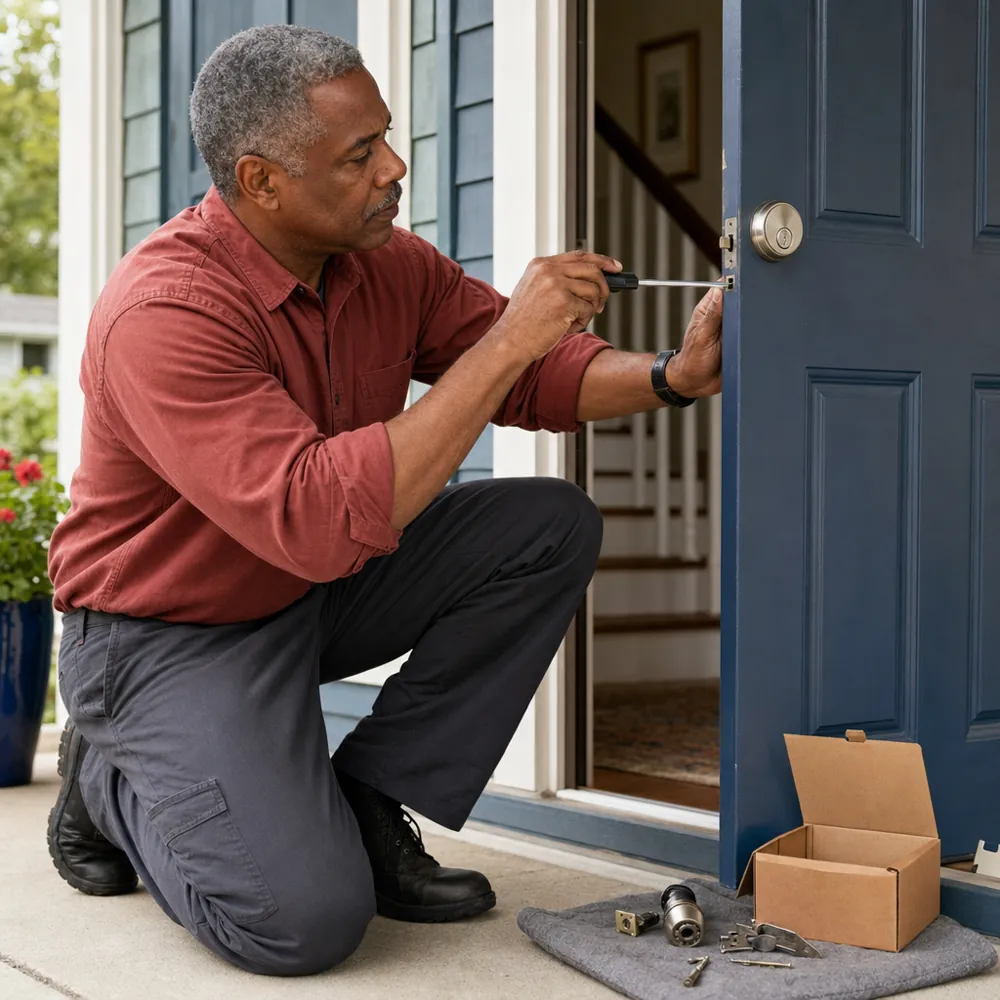
At the door, we work on the lock itself, not the door frame or trim. We open the lock, remove the cylinder or deadbolt as needed, and clear out broken key pieces, worn parts, or a loose strike. If the key is the issue, we fit a new key shape to the lock work already in place. If the hardware is out of line, we adjust the strike and the pocket, then reset the plate and screws so the parts meet the latch more evenly.
What changes afterwards
When the work is done, the new part is usually the key or the cylinder, while the adjusted part is often the strike, the reinforcement plate, or the long screws holding the lock in place. That changes how the deadbolt seats against the strike and how the key moves through the cylinder in Conshohocken. On a bored cylindrical lock or a mortise set, the hardware sits more squarely in the opening, and the lock body, key, and strike line up with less bind.
About Conshohocken
Conshohocken's main streets include Fayette Street running northeast to southwest and Elm Street running west to east.

Residential Locksmith, in short
Locks, cylinders, deadbolts and keys on a home, the strike and its pocket, reinforcement plates, long screws.

Worth knowing
A sticky key is a symptom; the worn cylinder is the cause. We look at the plug, the shell, and the key cut that is no longer carrying the load cleanly. If the cylinder is the part that is dragging, we work on that assembly instead of treating the key like the whole problem. A deadbolt that turns hard may be showing the same thing, with the latch body worn or the bolt face not meeting the strike cleanly. The lock gets opened, then the cylinder or deadbolt is reset at the point of wear.
Sometimes the real problem is not inside the lock at all. A loose strike plate, shallow screw bite, or a pocket that has shifted lets the bolt miss its target and makes the knob or deadbolt feel faulty. We can pull the strike, check the screw holes, set a reinforcement plate if needed, and replace short screws with long screws that reach solid wood. That changes the part causing the bind instead of just easing the symptom. In Conshohocken, a door may feel off because the strike has moved, not because the lock has failed.
A key that only works after a hard turn can point to a tired cylinder, but it can also point to the whole latch path being out of line. We sort that out by checking the key, the cylinder, the bolt travel, and the strike pocket together. If the lock body is sound, we do not force a fix on the key alone. If the deadbolt is scraping because the strike sits wrong, we correct the hardware that is in the way. The goal is to deal with the part making the trouble, not just the spot where the trouble shows up on the door.
Jobs we have done


Questions
My front door deadbolt sticks after the key turns halfway; what do you check first?
We check the cylinder, the deadbolt, and the strike alignment first, then see whether the latch is binding against the pocket or if the long screws have loosened the hardware. We can also look at the key itself for wear or bending, since that can make the lock feel tight before the bolt moves fully.
When my spare key stopped working on the back door, do you replace just the key or the lock too?
We start with the key and the cylinder. If the key is worn or damaged, we can make a new key. If the cylinder is worn, we can replace that part and keep the rest of the lock in place, including the deadbolt or knob hardware on the door.
After the strike plate on my side door came loose, what gets fixed besides the plate itself?
We look at the strike plate, the pocket it fits into, and the screws holding it in place. If the screw holes have opened up, we can use longer screws and reinforcement plates to give the lock more bite in the frame. We also check that the bolt enters the strike cleanly and that the door closes on the lock opening.
My front door key got stiff for weeks before it quit turning; what does that usually mean?
That usually means the lock or cylinder has worn enough to stop lining up smoothly. We check the key, cylinder, and deadbolt parts for damage and buildup, then we open the lock and correct the worn parts that are causing the bind, including the strike and reinforcement if they are adding stress to the turn.
My back door key still goes in, but it drags more every week; should I wait or have it checked?
You should have it checked before it seizes harder. A key that drags can mean the key itself is worn, the cylinder is tired, or the deadbolt is rubbing the strike. We look at the turn, test the key, and replace the worn lock parts or adjust the strike and screws as needed.