




Lansdale
Locks or keys to sort out in Lansdale? We come to the door
Deadbolts, cylinders, keys and strikes on your home, worked on at your own door.

Where
Lansdale
What we cover
Montgomery County, Pennsylvania
How we work
We are a mobile locksmith. We come to you.
The call
A call from Lansdale usually starts with a front door that will not latch right, a deadbolt that turns rough, or a house key that will not go in cleanly. The caller has often tried the spare key, jiggled the knob, or checked whether the bolt is stuck against the strike. We ask what the lock is doing, what style of hardware is on the door, and whether the problem is in the cylinder, the deadbolt, or the strike area before we come to you in Montgomery County.
What we check first
Before we touch anything, we look at the door hardware as it sits. We check the lock type, the keyway, the condition of the cylinder, the deadbolt travel, the strike plate, the pocket behind it, and the long screws that hold the assembly in place. That tells us whether the work is on the lock itself or on the strike side of the opening. In Lansdale, that first check decides whether we adjust the hardware, reset the strike, or replace the worn part in the lock.
The work itself
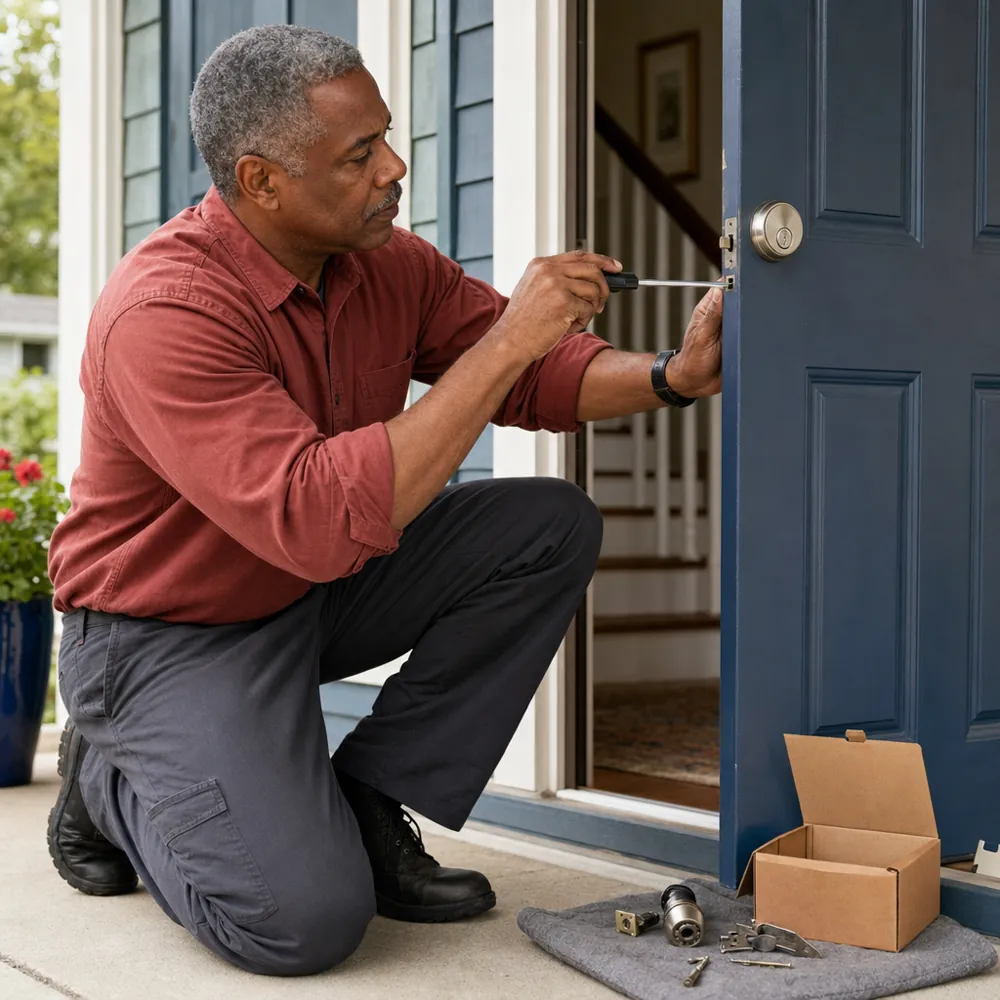
At the door, we open the lock, remove the cylinder or deadbolt as needed, and work on the parts that are worn or out of line. If the strike is off, we reset the plate and its pocket and use reinforcement plates and long screws where the wood allows it. If the key is the issue, we fit a new keying arrangement to the cylinder or rework the existing one so the lock matches the hardware on site. We keep the work on the door, not on the frame.
What changes afterwards
When the work is finished, the change is in the hardware itself: the cylinder is new or rekeyed, the deadbolt throw is set, and the strike sits where the bolt meets it. The screws hold more firmly, the plate has a sounder seat, and the key cuts match the lock parts that were reset. That leaves the lock with a different feel at the door, from the first turn of the key to the final movement of the deadbolt in Lansdale.
About Lansdale
Lansdale is part of the North Penn School District and is served by multiple elementary schools and Penndale Middle School.

Residential Locksmith, in short
Locks, cylinders, deadbolts and keys on a home, the strike and its pocket, reinforcement plates, long screws.

Worth knowing
A deadbolt that feels stuck can point to more than one fault. The key may be worn, the cylinder may have debris in the plug, or the bolt may be dragging because the strike is set tight in its pocket. We check the key first for rounding on the cuts and side wear, then test the cylinder with a matched key and look at how the throw changes with the door open and closed. That tells us whether the trouble is in the lock parts or in the way the bolt meets the strike.
A key that turns hard in a bored cylindrical lock can come from the key itself, a tired cylinder, or a screw that has backed out and shifted the trim. We read the wear on the key blade, feel for rough spots in the plug, and check whether the knob or lever is pulling the latch at an angle. On a rim or mortise lock, the symptom can be the same even though the cause is different. We separate them by testing the lock with the door open and then looking at the latch and strike together.
When a latch slips past the strike or the deadbolt does not catch cleanly, the trouble may be a loose strike plate, a bent bolt, or a cylinder that is not rotating far enough because the key is not cut right. We check the strike screws, the pocket behind the plate, and the bolt travel before we decide what needs attention. If the plate is sound, we look at the deadbolt or latch body itself. In Lansdale, that sort of symptom calls for checking the lock, the strike, and the key together.
Jobs we have done


Questions
My front door deadbolt turns, but the key sticks in Lansdale. What would you check first?
We would check the key cut, the cylinder wear, and whether the deadbolt is binding at the strike. A sticky key can come from worn pins, a tired cylinder, or loose hardware. We also look at the strike plate and screws, since a shifted strike can make the lock feel rough at the door.
The back door key spins now and the deadbolt does not latch in Lansdale. What usually causes that?
We would look at the lock body, the tailpiece, and the connection between the cylinder and bolt. A spinning key often points to a broken part inside the lock or a loose attachment at the deadbolt. We also check the strike pocket and reinforcement plate to see whether the bolt is meeting solid metal.
After my porch door was forced in Lansdale, the latch plate is bent and the key is hard to turn. What gets adjusted?
We would adjust the strike, the strike pocket, and the deadbolt hardware first. A forced door can shift the plate and throw the bolt out of line, which makes the key bind. We can also replace long screws or reinforcement parts when the existing hardware no longer holds the lock steady.
My deadbolt sticks after I turn the key; can you fix what keeps causing that?
Yes. We look at the deadbolt, cylinder, and the key together, because a sticky turn can come from a worn key, a loose cylinder, or a bolt that is not meeting the strike cleanly. If we only ease the turning, the trouble can come right back. We correct the part that is creating the bind, then check the lock with the door closed and the key in use.
My front door latch catches only when I pull hard; is that the lock or the strike pocket?
It can be either, and sometimes both. We check whether the latch is dragging because of the strike, the pocket, or worn hardware on the door. If we only make the latch feel smoother, the real problem can stay in place. We look for the source of the catch, then set the strike, plate, or lock parts that are causing it.