




Sadsbury Township, Lancaster County
Locks or keys to sort out in Sadsbury Township? We come to the door
Deadbolts, cylinders, keys and strikes on your home, worked on at your own door.

Where
Sadsbury Township, Lancaster County
What we cover
Lancaster County, Pennsylvania
How we work
We are a mobile locksmith. We come to you.
The call
A locked house door, a deadbolt that will not turn, or a key that stops partway through the cylinder brings the call to us in Sadsbury Township. Before that call, the lock has usually already been tried with the same key more than once, sometimes with a little extra force, and the hardware may have been checked from the inside and outside. We listen for the symptom first, because a deadbolt, a rim lock, and a bored cylindrical lock do not fail in the same way, even when they look alike from the outside.
What we check first
Before we touch anything, we look at the lock style, the cylinder, the strike, and the screw pattern in the door and the pocket. We also check whether the bolt is meeting the strike cleanly or dragging against the edge of the opening. In Sadsbury Township, that tells us whether the problem sits in the cylinder, the deadbolt, or the strike itself. A loose plate, short screws, or a worn key can change the job, and we work from that first reading before opening the lock.
The work itself
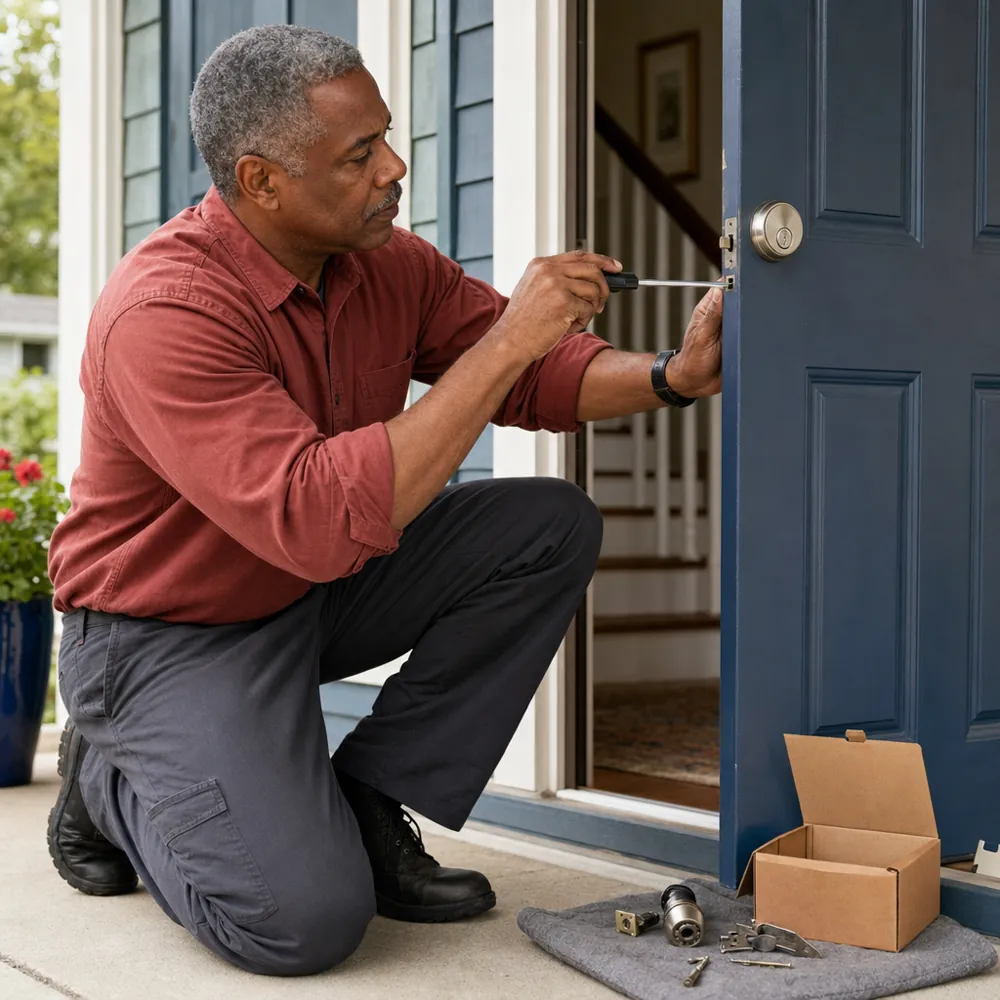
At the door, we open the lock and then work on the parts that affect how it moves. That can mean changing the cylinder, resetting the deadbolt, or adjusting the strike and its pocket so the bolt enters without resistance. We may replace weak screws with long screws and add a reinforcement plate where the strike needs firmer hold. If the key is worn or the cylinder is tired, we fit the hardware so the action at the keyway is cleaner, with the lock body and the door hardware matched again.
What changes afterwards
When the work is finished, the new part is the cylinder, the key, or the strike hardware, depending on what failed first. The adjusted part is usually the strike, the screw hold, or the deadbolt alignment at the door face. That changes how the bolt meets the opening, how the key turns in the lock, and how much side pressure the cylinder has to carry. In Sadsbury Township, that difference is in the hardware itself, with the lock, key, and strike set to move against each other more evenly.
Residential Locksmith, in short
Locks, cylinders, deadbolts and keys on a home, the strike and its pocket, reinforcement plates, long screws.

Worth knowing
Bad weather changes the setting, not the parts we work on. Wet weather can swell a wooden door and make the latch sit hard against the strike, so we check the strike plate, the pocket, and the deadbolt throw before we turn to the lock itself. We still open the lock, remove the cylinder when needed, and reset the strike with long screws or a reinforcement plate when the screws have loosened in damp trim. The weather may change the feel of the door, but the lock, key, and hardware stay the focus in Sadsbury Township.
Cold changes how metal and wood meet. A key that turned cleanly can drag in a worn cylinder when the door shrinks, and a deadbolt can start rubbing the edge of the strike opening even though the lock body has not moved. We still work on the same parts: the cylinder, the deadbolt, the latch, the strike, and the screws that hold the plate in place. What does not change is that we open the lock, inspect the hardware, and tighten or reset the mounting without shifting into carpentry.
Rain, snow, and wind mainly add moisture, grit, and stiffness. That means a key may come out wet, a rim or mortise lock may feel gritty, and the cylinder may need cleaning before it is turned again. We still do not plane the door, trim the frame, or chisel the pocket. We work the lock, key, deadbolt, and strike as they sit, replacing loose screws, setting a reinforcement plate, and checking that the hardware is secure against the door and frame edge. The weather changes the conditions, not the job.
Jobs we have done


Questions
My front door deadbolt spins in Sadsbury Township; what do we check first?
We check the cylinder, the deadbolt, and the strike alignment first. A spinning deadbolt can point to worn parts, a loose set screw, or a strike that no longer meets the bolt cleanly. We also look at the reinforcement plate and the long screws that hold it in place, then open the lock and replace the worn hardware as needed.
Why does my side door key turn halfway and stop after the last cold snap?
A half-turn stop usually points to a worn key, a tired cylinder, or parts that are binding inside the lock. We look at the key pattern, the cylinder, and the deadbolt before opening the lock. If the issue is in the strike pocket or the reinforcement around it, we correct the hardware there and reset the fit of the lock.
My back door latch catches hard, and the strike plate looks loose in the frame.
A loose strike plate can let the bolt meet the pocket off center, which makes the latch catch hard. We tighten the strike, check the pocket, and replace worn screws with longer ones when needed. If the lock body or cylinder has worn parts too, we open the lock and repair those pieces on the door.
My front deadbolt sticks after I turn the key; should we replace just the cylinder or look at the door latch too?
We look at what made the sticking start, not only the part that shows it. A cylinder can be worn, but a misaligned strike, loose screws, or a shifted deadbolt can put the same strain on it again. We check the lock, the strike, and the mounting points so we are fixing the source, not just the symptom.
My key works in the rear door only if I jiggle it; would a new key solve that, or is something else wrong?
A new key may copy the same problem if the lock is worn or the cylinder is out of line. We check both the key and the lock because a bad cut, worn parts, or a loose cylinder can all cause the same sticking. That way we are not masking the issue with a different key.