




Salisbury Township
Locks or keys to sort out in Salisbury Township? We come to the door
Deadbolts, cylinders, keys and strikes on your home, worked on at your own door.

Where
Salisbury Township
What we cover
Lancaster County, Pennsylvania
How we work
We are a mobile locksmith. We come to you.
The call
A call from Salisbury Township usually starts after a front door knob, deadbolt, or key has already given trouble. The caller has tried the spare key, worked the key back and forth, checked the inside turn piece, or seen the bolt drag when the door closes. On a home in Salisbury Township, we ask what the lock is doing, whether it is the cylinder, the deadbolt, or the strike that is acting up, then we come to you and look at the hardware at the door.
What we check first
Before we touch anything, we check the lock body, the cylinder, the deadbolt travel, and the strike plate in its pocket. We look at the screws that hold the strike and any reinforcement plate, because loose fasteners change how the latch meets the frame. If the door is rubbing the strike or the bolt is meeting the edge of the pocket, that decides the order of the work. In Salisbury Township, that first look tells us whether the fix stays with the lock or the strike side.
The work itself
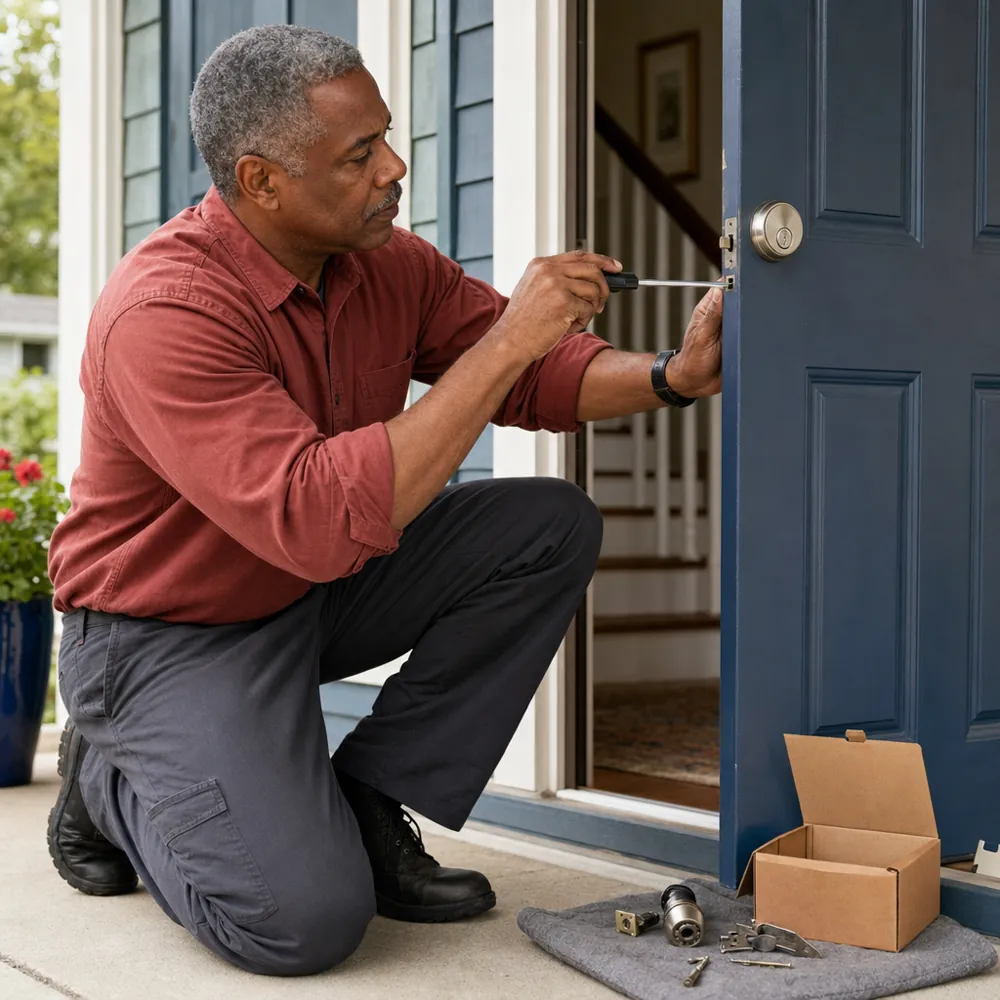
At the door, we open the lock, then work on the parts that are causing the bind or the break. That can mean replacing a worn cylinder, setting a new deadbolt, resetting the strike plate, or moving the reinforcement plate so the bolt enters cleanly. We use long screws where the strike and reinforcement need more hold in the framing behind the face plate. In a home near Ephrata or Salisbury Township, the job stays on the door hardware and the door edge area.
What changes afterwards
When the work is finished, the new part is the cylinder or deadbolt, and the adjusted part is usually the strike plate and its pocket. The long screws hold the strike and reinforcement more firmly, and that changes how the bolt meets the opening each time the door closes. The keyway sits in the new cylinder with a different feel, and the latch face meets the strike in a tighter line. In Salisbury Township, that leaves the lock, key, and strike set as one fitted assembly.

Residential Locksmith, in short
Locks, cylinders, deadbolts and keys on a home, the strike and its pocket, reinforcement plates, long screws.

Worth knowing
On an older house, a sticking deadbolt often starts with worn trim around the strike, loose screws in the plate, and a cylinder that has seen years of hard keys. The lock body may still be sound, but the bolt is rubbing because the strike has shifted or the screw holes have opened up. We reset the strike, replace short screws with long screws, and tighten the plate so the bolt has a better path into the pocket. On newer doors in Salisbury Township, the problem is more often a misaligned bored cylindrical lock or a deadbolt mounted out of square, and the fix stays with the hardware itself.
Older exterior doors also show wear at the lock face. A mortise lock may have a loose cylinder, a set screw that will not hold, or a key that turns rough because the core parts are tired. On a newer door, the complaint may be simpler: the key will not enter cleanly, the deadbolt thumbturn binds, or the strike opening is too tight for the bolt. In both cases we work on the lock, cylinder, deadbolt, key, strike, and reinforcement plate, but the age of the door changes which parts get attention first.
The frame and slab tell the story differently, too. On an older building, repeated use can leave the strike pocket enlarged, the reinforcement plate bent, and the screw holes stretched so the hardware walks out of place again. On a newer one, the door and frame are usually tighter, so a small shift in the deadbolt or strike shows up as a harder throw or a key that feels off before the lock is badly worn. We adjust the hardware that is there, swap weak screws for long screws, and reset the strike and plate on the door and frame hardware that already exists.
Jobs we have done


Questions
My front door deadbolt sticks when I turn the key halfway; what do you check first?
We check the cylinder, the deadbolt, and the strike alignment first, then we look at the screws and reinforcement plate that hold the hardware in place. A key that turns partway can point to worn parts or a shifted strike pocket, and we sort through the lock itself before touching anything else.
If my side door key spins but the latch does not catch, what might be worn?
The cylinder or the internal lock parts may be worn, and the key may no longer move the deadbolt the way it should. We look at the key cut, the lock body, and the strike side of the door so we can find where the movement stops and what part needs attention.
After my back door lock was forced, what can you change besides the broken key?
We can change the lock, the cylinder, the deadbolt, the strike, and the reinforcement plate, and we can replace long screws where they no longer hold well. That kind of repair helps put the hardware back in order after a forced entry, with the damaged lock parts and the door hardware under review
My front door key felt stiff for weeks, then stopped turning; what do you check first?
We check the cylinder, the key, and the deadbolt alignment together, since slow wear can show up in more than one place. We look for parts that are binding, worn, or loose, then reset the hardware that is out of line and tighten the strike, screws, or reinforcement plate as needed.
My back door spare key turns halfway, then jams after months of use; what usually needs replacing?
We look at the worn parts inside the lock before anything else, because a key that starts jamming after steady use can point to the cylinder, the key itself, or a worn deadbolt. If the wear is inside the lock, we replace the worn cylinder or key parts and check the strike pocket and screws around the door