




Upper Providence Township, Delaware County
Locks or keys to sort out in Upper Providence Township? We come to the door
Deadbolts, cylinders, keys and strikes on your home, worked on at your own door.

Where
Upper Providence Township, Delaware County
What we cover
Delaware County, Pennsylvania
How we work
We are a mobile locksmith. We come to you.
The call
A locked house door, a key that will not turn, or a deadbolt that stops partway can bring a call from Upper Providence Township with little more than the lock and the symptoms to go on. The caller has usually tried the key again, checked another key, and looked at the deadbolt and latch from the inside side if that was possible. We come to you and listen for what the hardware is doing, then we look at the door edge, the strike, and the cylinder before anything is moved.
What we check first
Before we touch the lock, we check how the cylinder sits in the door, how the deadbolt lines up with the strike pocket, and whether the reinforcement plate and long screws are holding the assembly tight. That inspection shapes the work in Upper Providence Township because a loose strike calls for different attention than a worn cylinder or a key that no longer fits cleanly. On a home door, a small shift in the mounting can change how the bolt and latch meet, so we look first and then decide what needs to be opened or adjusted.
The work itself
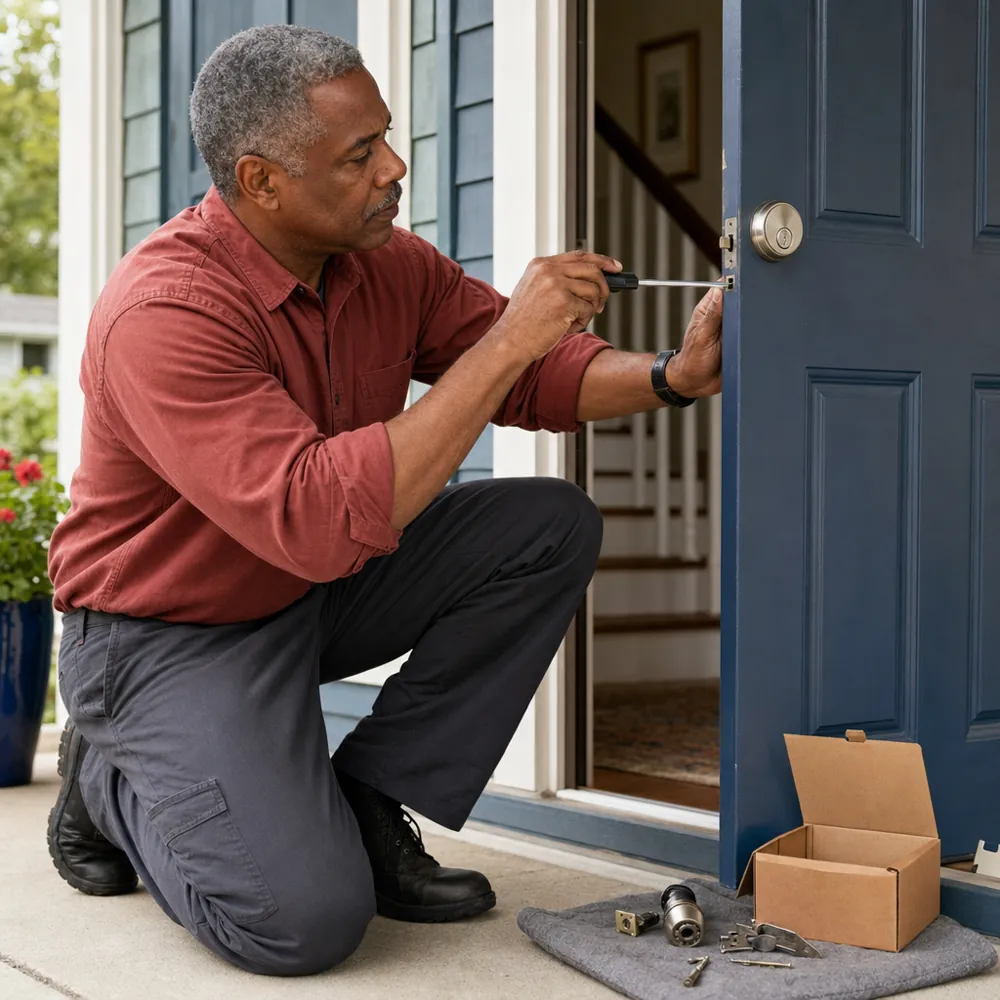
At the door, we open the lock, remove the cylinder or deadbolt parts as needed, and work on the pieces that control the key and bolt movement. If the strike is out of line, we adjust the plate in its pocket and reset the screws so the hardware sits where it belongs. If the cylinder is the issue, we replace or rekey that part and test the turn of the key through the full travel of the bolt. In Upper Providence Township, that means the work stays on the lock set itself.
What changes afterwards
When the work is finished, the changed part is the cylinder or the deadbolt body, and the adjusted part is the strike and its mounting. The keyway and plug no longer bind in the same way, and the bolt meets the strike pocket with the hardware set to a new position. The reinforcement plate and long screws hold that setting in place, which changes how the lock closes, turns, and catches at the door. On a residential lock in Upper Providence Township, that is the difference left in the hardware.
Residential Locksmith, in short
Locks, cylinders, deadbolts and keys on a home, the strike and its pocket, reinforcement plates, long screws.

Worth knowing
A lock that comes back with the same complaint usually has worn parts working against each other. A key that has rounded cuts can lift the plug unevenly, and a cylinder with dirt or wear can drag every time it turns. We look at the key first, then the cylinder, and we replace the worn key or cylinder rather than trying to force past the wear. On a deadbolt, a loose throw and a sloppy latch edge can let the bolt bind again, so we check the bolt, the strike, and the screws that hold both in place.
The strike pocket is another place where repeat trouble starts. If the strike plate sits loose, or the screws are short, the plate shifts when the deadbolt hits it and the bolt starts scraping the edge again. We reset the strike plate, use longer screws where the wood will take them, and add a reinforcement plate when the pocket is weak. In Upper Providence Township, we also see damage from a door that has been slammed against a spring latch, which bends the strike enough to make the bolt catch on the same edge each time.
A keyed lock can also keep failing when the wrong key has been copied from a worn copy, not the original. That leaves shallow cuts and corners that do not match the cylinder well, so the same bind comes back after a few turns. We can cut a fresh key from a better pattern, then check the cylinder for looseness and the set screw or trim ring that holds it steady. When a bored cylindrical lock has play in the knob or deadbolt, tightening the body and securing the strike keeps the parts aligned at the door and the lock cylinder
Jobs we have done


Questions
My front door deadbolt sticks after the key turns in Upper Providence Township, what do you check first?
We check the cylinder, the deadbolt, and the strike to see where the binding starts. If the lock body is worn or the strike is out of line, we adjust the hardware and replace the worn parts that affect the turn. We also look at the long screws and reinforcement plate around the lock.
After moving into my house near Upper Providence Township, can you change the basement door key so the old one stops working?
We can rekey the lock so the current key no longer matches the cylinder. If the key has to be replaced too, we cut a new one for the home lock and test the deadbolt, knob, or lever set at the door. We keep the work centered on the lock and key, not the frame.
My side door latch feels loose and the strike plate has shifted on my Upper Providence Township home, what gets fixed?
We set the strike back where it belongs and secure the pocket with longer screws or a reinforcement plate if the wood has loosened. If the latch or cylinder is worn, we replace that part and match it to the keying already on the door. Then we check the lock, strike, and screws together.
When you were at my front door, why did you need to check the strike pocket too?
Because the latch was not meeting the strike cleanly, and the pocket can hide loose screws or a plate that has shifted. We look at the lock, the strike, and the screws together so we can see what is binding and what only needs tightening or reset. That keeps us from treating the wrong part of the door.
Why did you want my old key when you were working on my deadbolt?
Because the key tells us what the cylinder has been going through. A worn key can bind, turn rough, or stop the bolt from moving fully, and that helps us sort out whether the issue is the key, the cylinder, or both. We use that check before we touch the lock body or make any changes to the hardware.