




Haverford Township
Locks and keys for a Haverford Township business? We come to you
Cylinders, master keys and exit hardware on business doors, worked on at your premises.

Where
Haverford Township
What we cover
Delaware County, Pennsylvania
How we work
We are a mobile locksmith. We come to you.
The call
When a business lock starts sticking or an exit device will not reset, the call usually comes after someone has already tried the key a few times, checked for a loose cylinder, or worked the lever again to see if it will clear. In Haverford Township, that call can be for a rim lock on a side entrance, a mortise lock on an office door, or a bored cylindrical lock on a suite door. We come to you, listen to what the hardware is doing, and note which part is failing before anything is touched.
What we check first
Before we turn a cylinder or remove a trim piece, we check the door, the latch, the cylinder face, the keyway, and any exit hardware tied to the opening. That tells us whether the problem sits in the lock body, the cylinder, the key, or the lever set. On a commercial opening in Haverford Township, that first look decides whether we are working on a worn cylinder, a keyed entry function, or an exit device that is hanging up. We keep the hardware in view and match the work to what is actually moving.
The work itself
At the door, we open the lock, then remove the cylinder or lock body as needed and reset the parts that control the turn of the key or the movement of the lever. A master key setup may need to be rekeyed so one change affects the right openings. An exit device may need its trim checked so the latch and bar move in the same path. In some cases, we adjust the mortise case or the bored lock assembly so the components line up with less drag, including at sites in Haverford Township and nearby Yeadon.
What changes afterwards
When the work is finished, the changed part is the cylinder, while the original lock body or exit hardware has been adjusted to match the new setting. That changes how the key enters, how the plug turns, and how the latch or bar responds at the opening. In a commercial setup, a master key change can leave one cylinder altered while the rest of the system stays in place. The hardware is set with a different internal arrangement, and the key now follows that new arrangement through the lock.
About Haverford Township
Haverford Township is home to Merion Golf Club and Llanerch Country Club, which hosted men's major golf championships.
Commercial Locksmith, in short
Locks, cylinders, master keys and exit hardware on business premises.

Worth knowing
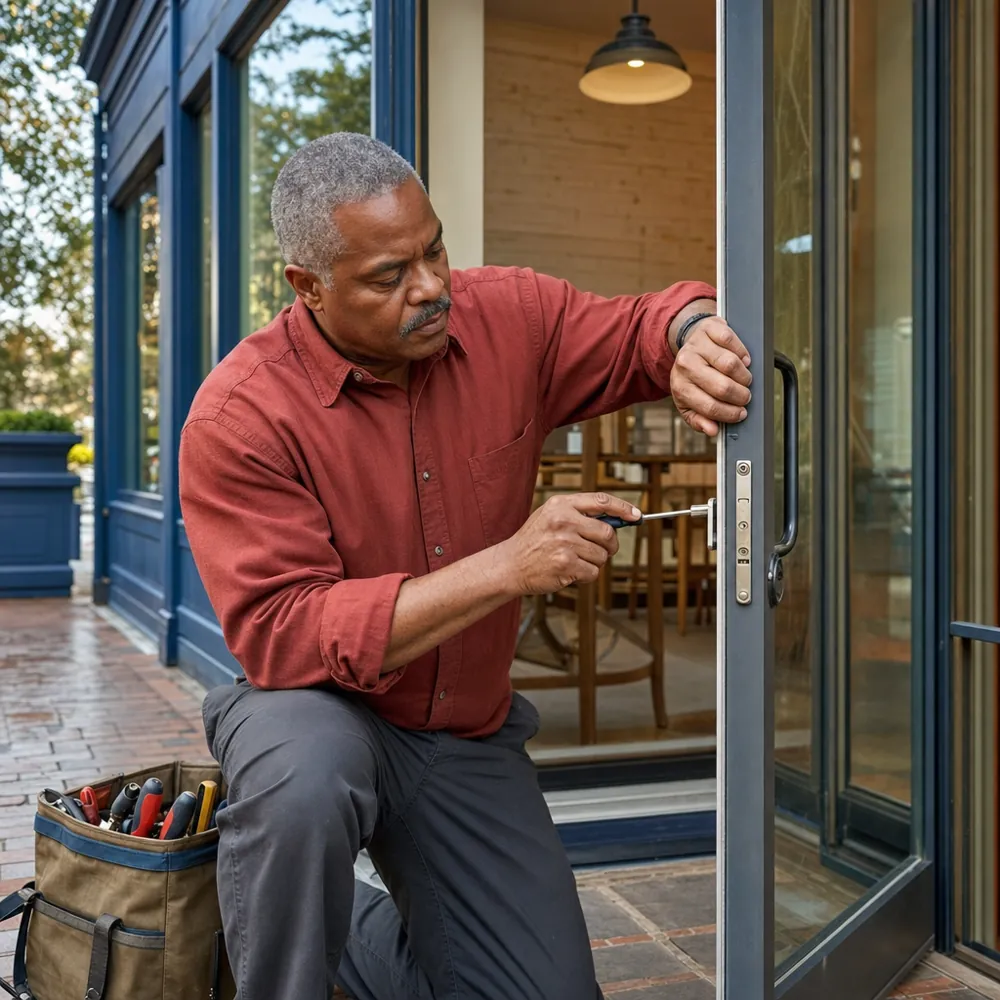
When the door has a rim lock, the work starts at the case on the inside face of the door. We check the cylinder, tailpiece, and thumbturn relationship, then remove the cylinder if that is the part that has failed or needs to be keyed to a master system. The operating parts stay with the lock body, so the job is usually centered on the cylinder and keying. If the rim device also has an exit function, we check the latch retraction and the return of the paddle or lever after the opening is handled.
A mortise lock changes the job because the lock body sits inside a pocket in the door and ties together the latch, deadbolt, faceplate, and trim. We work on the cylinder or cylinders first, then inspect the case for worn parts that make the latch drag or the bolt bind. If the keys need to be changed into a master key system, the cylinder is where that work happens, not the door. In Haverford Township, that usually means matching existing trim and spindle setup before anything is taken apart.
With a bored cylindrical lock, the work is different again because the latch assembly, chassis, and outside cylinder are separate parts through the door. We check whether the lock uses a keyed knob, lever, or separate deadbolt above it, then remove the cylinder or rekey it as needed without disturbing the whole set. Exit hardware on the same door changes the approach, since a panic bar or exit device can share the opening and interfere with how the latch is dressed and aligned. The latch bolt, trim, and exit bar all have to be read together on the door.
Jobs we have done


Questions
My storefront mortise lock turns hard after lunch; do we need a new cylinder or just rekeying?
Not always. We look at the cylinder, the key, and how the lock is wearing, then we decide whether rekeying or cylinder replacement makes more sense for that lock. If the key is worn or the cylinder is sticking, we deal with that at the lock and its key.
I lost one key on our master key system for the suite doors; will the other keys still work?
Yes, the other keys can still work, and we can rekey the affected cylinder so the missing key no longer fits it. For a master key system, we pay attention to which doors share that keying and keep the cylinders matched to the right keys.
The exit hardware on our rear door keeps sticking after people push through it; what do you check first?
We check the exit hardware itself, the cylinder if one is part of it, and the way the lock is reacting when the bar is used. We also look at whether the keying matches the door it serves. That lets us focus on the hardware and the lock rather than guessing at the door.
My office side door key turned stiff for weeks, then stopped; what gets checked first?
We look at the cylinder, the key, and the way the lock body is wearing together. Slow wear can leave the key binding before it quits turning at all. We check for rubbed parts, buildup inside the cylinder, and a key that has worn enough to stop matching the lock cleanly, then open the lock and rebuild the worn side of the problem.
The back entrance key in my Haverford Township store still inserts, but it barely turns now; is that a sign of wear?
Yes, that is often wear showing up before a full failure. We look for a cylinder that has gotten loose inside, a key that is rounding off, or internal parts that are dragging from long use. That kind of change can start small and spread until the key will not turn the lock at all.