




Narberth
Locks and keys for a Narberth business? We come to you
Cylinders, master keys and exit hardware on business doors, worked on at your premises.

Where
Narberth
What we cover
Montgomery County, Pennsylvania
How we work
We are a mobile locksmith. We come to you.
The call
A call about a commercial lock in Narberth usually starts after a key turns hard, a cylinder binds, or an exit device stops moving the latch the way it should. The caller has often tried the spare key, checked the other side of the door, and worked the handle again to see whether the problem changes. We listen for whether the issue is in the cylinder, the master key setup, or the exit hardware, then we come to you and stay focused on that lock work.
What we check first
Before we touch anything, we look at the door, the lock body, the cylinder, and the key that belongs to it. On a business door, that first look tells us whether the trouble is in a rim lock, a mortise lock, or a bored cylindrical lock, and whether the master keying needs attention. In Narberth, that check also shows whether the hardware is worn, misset, or simply out of alignment inside the lock itself, which decides the order of the work.
The work itself
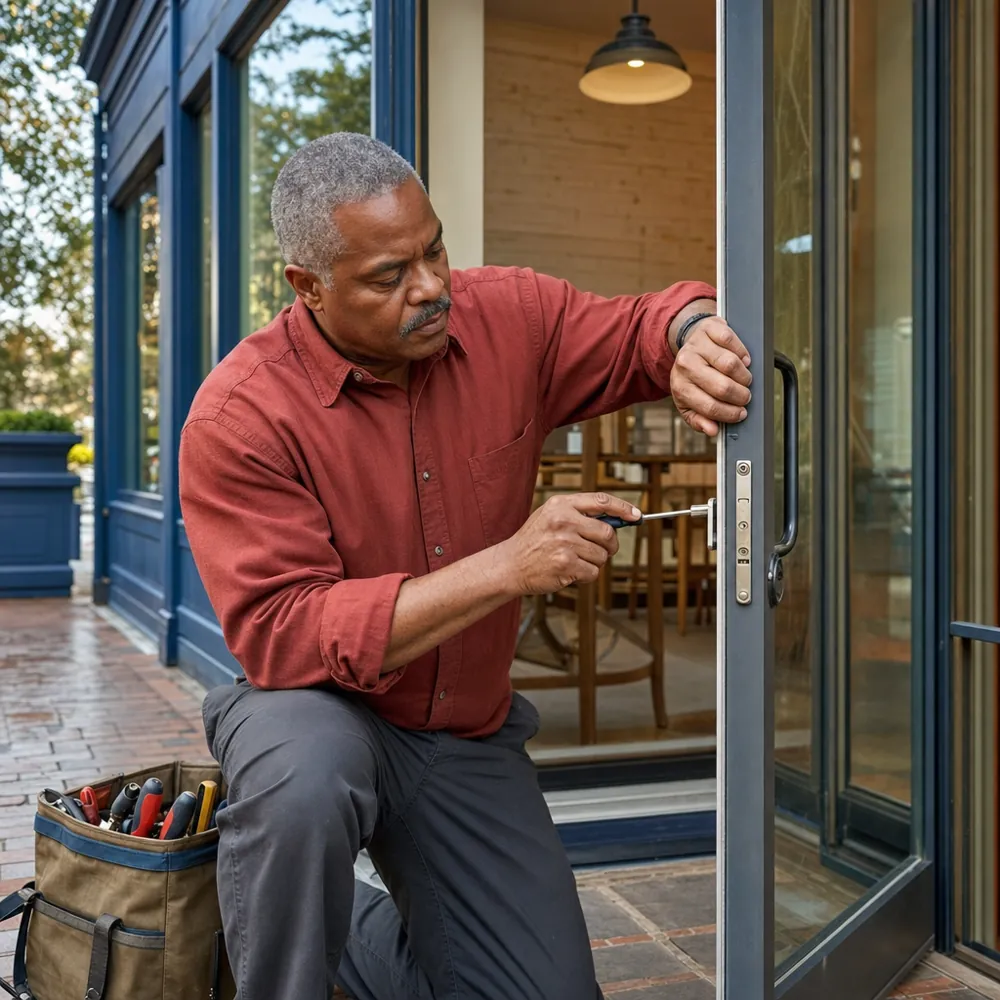
At the door, we open the lock and work on the part that is holding it up. That may mean removing the cylinder, setting in a new cylinder, adjusting the latch or bolt, or reworking the keying so the same lock follows the right master key pattern. On exit hardware, we test the moving parts, reset the linkage, and make sure the mechanism is not hanging up under pressure. We keep the work on the hardware, not on the door edge or frame.
What changes afterwards
After the work, the lock has a new cylinder or a reset cylinder, and the key side is the part that changes most. In a master key system, the pins inside the cylinder are set to the new keying pattern, while the body of the lock and the exit hardware stay in place. That changes how the key enters, turns, and releases the latch or bolt. On a commercial lock in Narberth, the difference is in the cylinder and the way it responds to the key.
About Narberth
Narberth has a central business district along Haverford Avenue, Narberth Avenue, Forrest Avenue, and Essex Avenue.

Commercial Locksmith, in short
Locks, cylinders, master keys and exit hardware on business premises.

Worth knowing
On a mortise lock, we pull the old cylinder, cam, and retaining screw, then seat a new cylinder with a fresh cam and the correct face ring. If the lock body is worn, we also replace the spindle or trim ring that lets the key turn cleanly. The customer’s spare keys stay with them, but only the ones that still match the new keying matter. A bent key, a cracked head, or a copy with rounded cuts should stay out of service, while a clean duplicate can still be used.
With a rim cylinder, the worn cylinder barrel comes out with the mounting bolts and the tailpiece that reaches the latch case. We fit a new barrel, a matching tailpiece, and new screws so the cylinder sits tight in the night latch or deadlatch housing. In Narberth, we also see spare keys that have been copied more than once, and those are the ones to check closely. A straight key with sharp cuts is worth keeping; a key that rocks in the bow or hangs in the cut pattern is not.
For exit hardware, the old lock cylinder, dogging parts, and key cylinder escutcheon can be swapped when the keyway is loose or the key will not turn the latch mechanism cleanly. We install a new cylinder and, where needed, a new actuator piece that links the key to the device. The customer keeps their spare keys, and the ones that still match the new cylinder remain useful. Keys that are bent, split at the bow, or copied from a worn original should be pulled out and left aside with the old cylinder.
Jobs we have done


Questions
My office master key turns halfway in the Narberth filing room door. What do you check first?
We check the cylinder, the key, and whether the lock has shifted enough to bind at the turn. A master key issue can come from wear in the cylinder or from another key in the same system not matching cleanly. We test the lock, look at the keying, and decide whether the cylinder needs adjustment or replacement.
The panic bar on our rear exit sticks when I push it at the end of the day. What causes that?
We look at the exit hardware, the latch, and the way the door meets the frame. A sticking bar can come from a latch that is not releasing fully or from worn hardware inside the device. We open the hardware, check the moving parts, and replace worn pieces on the exit hardware.
One of the side door keys in my shop in Narberth only works after I jiggle it. Should I worry about the lock?
We would treat that as wear in the cylinder or the key itself. A key that needs jiggling can mean the cuts are worn down or the cylinder parts are not lining up smoothly anymore. We check both, then rekey or change the cylinder if the lock has too much wear.
My back office door key felt tight for weeks before it stopped turning; what do you check first?
We check the cylinder for worn parts, the key for rounding, and the way the lock turns under use. Slow wear can build up in the cylinder and on the key at the same time, so we look at both together before deciding whether the lock needs repair or replacement of that part on the door.
My storefront mortise lock turns hard on the key, but the bolt still moves; what could be wearing out?
The keyway or the internal cylinder can be wearing unevenly, even when the bolt still moves by hand. We also look at the key itself, because a worn key can start the problem and make the lock feel stiff long before it stops turning. That kind of wear shows up in the lock and the key at the same time.