




Marietta
Locks and keys for a Marietta business? We come to you
Cylinders, master keys and exit hardware on business doors, worked on at your premises.

Where
Marietta
What we cover
Lancaster County, Pennsylvania
How we work
We are a mobile locksmith. We come to you.
The call
A call about a commercial lock in Marietta usually starts after a key stops turning in a mortise lock, a cylinder feels rough, or an exit device will not latch cleanly. The caller has often tried the key again, tried another key, or worked the lever more than once to see whether the binding clears. We listen for the lock type, the door hardware, and whether the issue is at one cylinder or through the master key setup before we come to you in Marietta.
What we check first
Before we touch anything, we look at the hardware in front of us. On a commercial door, that means the cylinder style, the condition of the keyway, the fit of the trim, and how the exit hardware sits against the door. That first look tells us whether the work belongs on the cylinder, the lock body, or the key side of the setup. It also tells us what has to stay in place while we open the lock and what can be adjusted after.
The work itself
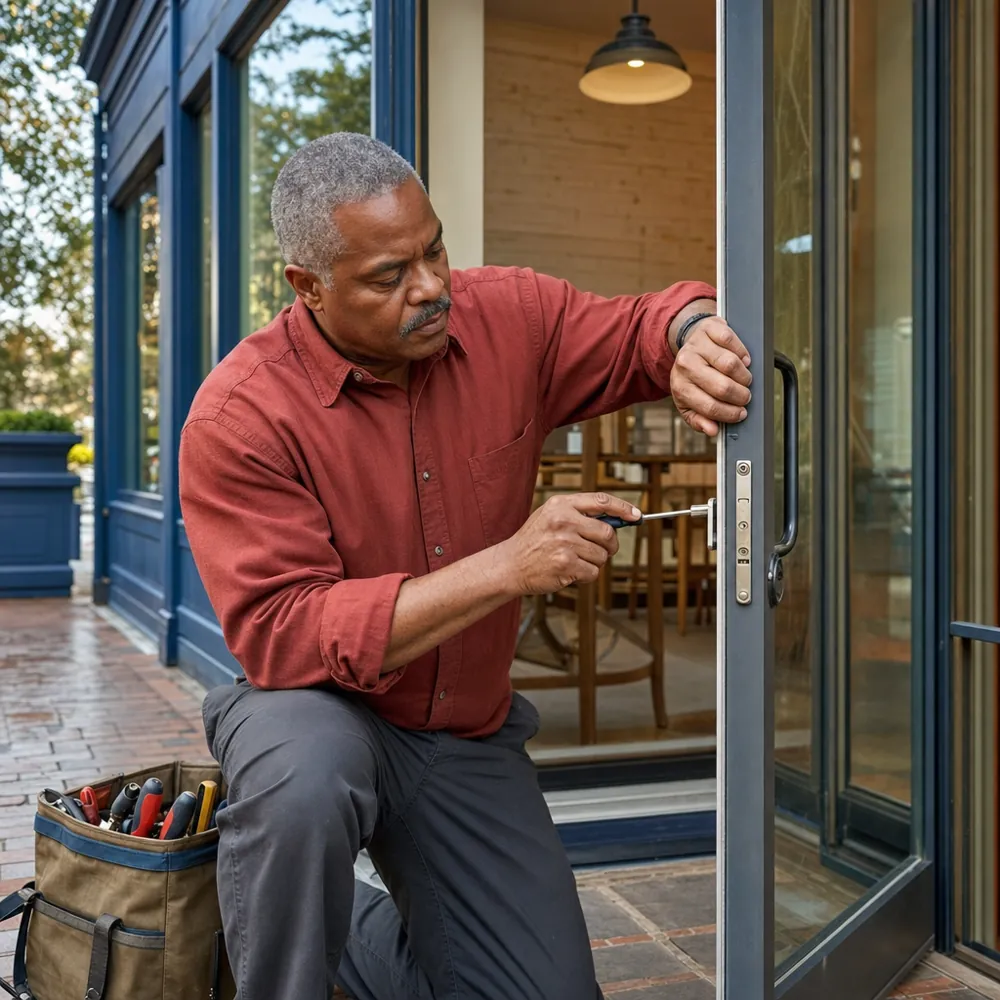
At the door, we work with the lock itself, not the surroundings. We open the lock, remove the cylinder if that is the part being serviced, and reset the keying where the master key pattern or worn key cuts are part of the problem. On bored cylindrical and mortise hardware, we set the parts back into alignment and test the action of the key, latch, and exit device. In Marietta, that kind of work is usually about the lock body and the cylinder, not the door.
What changes afterwards
When the work is finished, one part is new or rekeyed and one part is adjusted, so the hardware no longer behaves the way it did before. A cylinder may be changed out while the lock body stays in place, or the keying may be reset while the master key setup stays intact. On exit hardware, the latch point and the lever action are the parts we set back into a different condition, and the lock, key, and device now respond to each other differently.
About Marietta
Marietta’s Market Street runs the entire length of the town as the primary east west artery.

Commercial Locksmith, in short
Locks, cylinders, master keys and exit hardware on business premises.

Worth knowing
A key that has been copied from another worn key brings the same trouble back. The cuts are already rounded, so the cylinder is forced to take a shape it should not see. We look at the original key, the copy, and the cylinder face, then make a key from the cleanest pattern available and check the plug for drag. If the key is still rough after that, the problem is usually inside the cylinder, where the plug, housing, or retaining parts have wear that keeps repeating the bind.
Loose mounting screws can also send the same lock back into trouble. On a bored cylindrical lock, the chassis shifts in the hole, the rose loosens, and the tailpiece starts to miss the cam squarely. That leaves the knob turning hard and the latch not moving fully. We reset the lock, tighten the through-bolts, check the spindle for play, and make sure the cylinder is seated flush instead of cocked in the door. In Marietta, that kind of movement is what brings a commercial door back with the same complaint.
Exit hardware repeats problems when the moving parts are left bent, sticky, or half-secured. A loose latchbolt, worn dogging piece, or bent trim spindle can let the bar or paddle work one day and hang the next. We inspect the screws, springs, latch case, and fasteners, then replace the parts that have lost their shape and reset the hardware so the throw is full and even. If only the outside handle gets attention, the same bind comes back at the latch and the door stays the same at the edge.
Jobs we have done


Questions
My front office door key turns but the mortise lock still sticks; what do you check first?
We check the cylinder, the lock body, and the way the key is matching the lock. A worn key or a tired cylinder can keep the bolt from moving smoothly. We also look at the exit hardware if it is tied into the same opening so we can narrow the problem to the part that is binding.
One key opens the rear storage door, but the master key feels different in the same lock; should I worry?
We compare the keying and the cylinder setup before anything else. A master key system can wear differently than a single key system, and a changed or damaged cylinder can make the difference show up right away. We check the lock, the cylinder, and the keying pattern so the door hardware is matched to the way it is being used.
After someone forced the side entrance, the exit hardware still latches, but the key will not turn cleanly; what needs attention?
We look at both the lock and the exit hardware because a forced door can leave one part working and another part out of line. The cylinder may need to be replaced, or the lock body may be holding the key up. We focus on the parts that control the door opening and the latch movement.
I had our side office key stop turning, so what hidden wear do you check before you open the lock?
We check the cylinder, the key, and the latch for wear that is not obvious from the outside. A key can be rounded off, the plug can bind, or the latch parts can drag against each other. We also look for loose trim and signs that the lock has been forced, then we open the lock and check the cylinder.
The rear exit hardware on our shop door felt loose, so what do you look at that I probably missed?
We check the exit hardware for loose fasteners, a sagging bar, and a latch that is not catching cleanly. We also look at the mortise or bored lock under it, because the hardware can feel fine while the latch body is shifted or worn. That lets us open the lock and check the hardware around it.