




Mount Joy
Locks and keys for a Mount Joy business? We come to you
Cylinders, master keys and exit hardware on business doors, worked on at your premises.

Where
Mount Joy
What we cover
Lancaster County, Pennsylvania
How we work
We are a mobile locksmith. We come to you.
The call
When a business in Mount Joy calls, the problem is usually already narrowed down by the time we hear it. A key may turn hard in a mortise lock, a cylinder may spin without retracting the latch, or a master key may stop working on one office door while others still respond. The caller has often already tried the key again, checked the handle, and made sure the wrong key is not being used. We come to you in Mount Joy and look at the lock hardware as it sits.
What we check first
Before we touch anything, we check the lock type, the cylinder style, the keyway, and how the exit hardware is mounted on the door. That tells us whether the problem is in the cylinder, the trim, the keyed core, or the latch side of the hardware. On a commercial door in Mount Joy, a stiff turn can come from wear in the cylinder or from a misfit between the key and the lock. That first look sets the work, whether the lock is rim, mortise, or bored cylindrical.
The work itself
At the door, we open the lock and work on the part that is keeping it from turning or latching the way it should. For a cylinder issue, we remove the core or cylinder body, inspect the key pattern against the worn spots, and reset the hardware that drives the latch or bolt. For master key work, we rekey the lock set so the control key and change key are aligned to the system in use. In Mount Joy, that can also mean adjusting exit hardware so the latch meets the lock cleanly.
What changes afterwards
After the work, the lock has a changed cylinder or a new keying pattern, and the keyed part no longer matches the old setup. The master key system may have a fresh pinning plan inside the cylinder, while the lock body, latch, or exit device keeps the same mounting and movement. What changes is the way the key engages the hardware and how the turn feels at the plug or core. On a commercial door in Mount Joy, that leaves the lock set with a different internal fit and a reset key path.
About Mount Joy
Mount Joy lies in northwestern Lancaster County and sits along a state highway known locally as Main Street.

Commercial Locksmith, in short
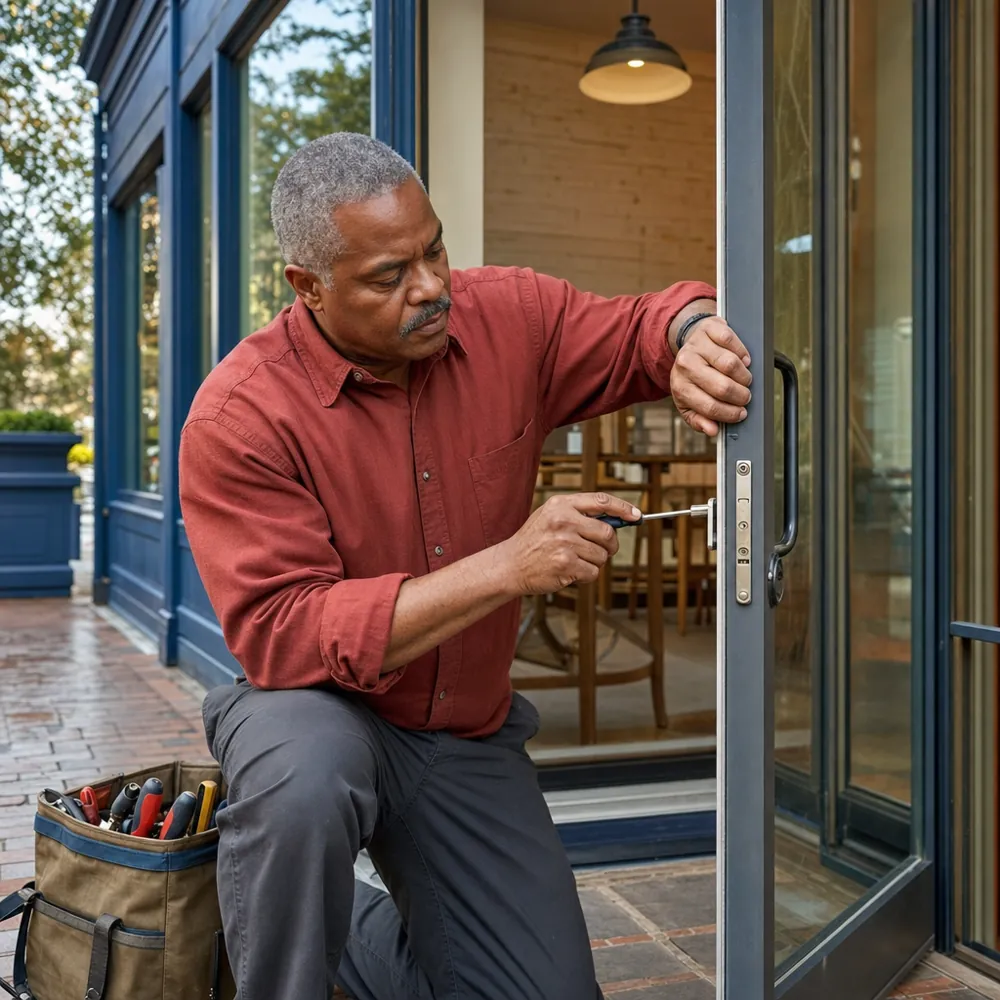
Locks, cylinders, master keys and exit hardware on business premises.

Worth knowing
On a rim lock, the work starts at the outside housing and the tailpiece, because the cylinder sits in the case instead of through the door. We check how the rim cylinder is fastened, take off the retaining hardware, and swap the cylinder if the body is worn or the key no longer matches the rest of the building. If the latch case is sound, we leave it in place and work only the cylinder and keyway parts. On older storefront doors in Mount Joy, that layout changes the order of every step around the lock.
A mortise lock calls for a different approach because the case is set into the door and the trim, cylinder, latch, and deadbolt parts all interact inside that pocket. We remove the trim, free the cylinder, and inspect the spindle, cam, and mounting screws before any rekeying or replacement work. If the case is still serviceable, we can rebuild the keyed part without disturbing the full body. If the mortise case is worn, the cylinder may be only one part of the job, with the inside mechanism needing attention next.
Bored cylindrical hardware is different again, because the lock body passes through a round bored hole and the latch tube, exterior cylinder, and inside knob or lever all tie together. We check the through-bolts, the rose plates, and the latch chassis first, then decide whether the keyed cylinder alone needs to be changed or whether the complete lockset should be handled as a unit. On exit hardware, the panic bar, dogging parts, and cylinder cutout change the sequence too, since the keyed part has to match the device already on the door.
Jobs we have done


Questions
My office front door deadbolt keeps sticking after lunch, and the key turns hard. What do you check first?
We check the cylinder, the latch alignment, and the condition of the key before anything else. A sticky deadbolt can point to wear inside the lock, a shifted cylinder, or a key that no longer matches the lock well. We open the lock, inspect the moving parts, and set the hardware so the deadbolt moves cleanly.
After our tenant left, I need the back storage door rekeyed and a new master key set up. How do you handle that?
We change the cylinder arrangement so the old key no longer works and then build the master key system around the doors you want grouped together. That lets one key open the right locks while other keys stay limited to the doors they should open. We test each cylinder and label the keying clearly.
My exit bar on the side door feels loose, and the key for the outside trim is not turning right. What do you do with that?
We check the exit hardware for looseness, wear, and any binding at the cylinder or trim. A loose bar can affect how the door opens, and a rough key turn can point to a worn cylinder or internal parts that need attention. We tighten, adjust, and service the hardware so the lock and exit device work together.
When my office door key turned but the latch stayed shut, what do you try next?
We stop using the first method and change the approach based on what the lock is doing. If the key turns but the latch does not release, we look at the cylinder, the movement inside the lock, and how the hardware is set. Then we open the lock with a different method and adjust the work to that door.
When my rear storage door key kept sticking, how do you decide to switch approaches?
We change the approach when the key does not move the cylinder cleanly or the lock starts resisting in a different way. That tells us the first plan is not the right one for that door. We then try a different way on the lock body, the cylinder, or the exit hardware until the right part is addressed.