




Mount Joy Township
Locks and keys for a Mount Joy Township business? We come to you
Cylinders, master keys and exit hardware on business doors, worked on at your premises.

Where
Mount Joy Township
What we cover
Lancaster County, Pennsylvania
How we work
We are a mobile locksmith. We come to you.
The call
A commercial lock problem in Mount Joy Township usually reaches us after a key stops turning, a cylinder feels tight, or an exit device will not unlatch the door the way it should. The caller has normally tried a spare key, checked the latch, and made sure the key is fully seated before reaching for the phone. We answer the call, ask what kind of lock is on the business door, and gather the details that point us toward a rim lock, mortise lock, bored cylindrical lock, or exit hardware.
What we check first
Before we touch anything, we look at the lock body, the cylinder, the keyway, and the way the hardware sits on the door. That matters in Mount Joy Township because a worn cylinder, a bent key, and a loose exit device do not call for the same work. We check whether the issue is in the key, the cylinder, the latch, or the exit hardware, and we decide from there whether the job calls for opening the lock, rekeying it, or replacing the cylinder.
The work itself
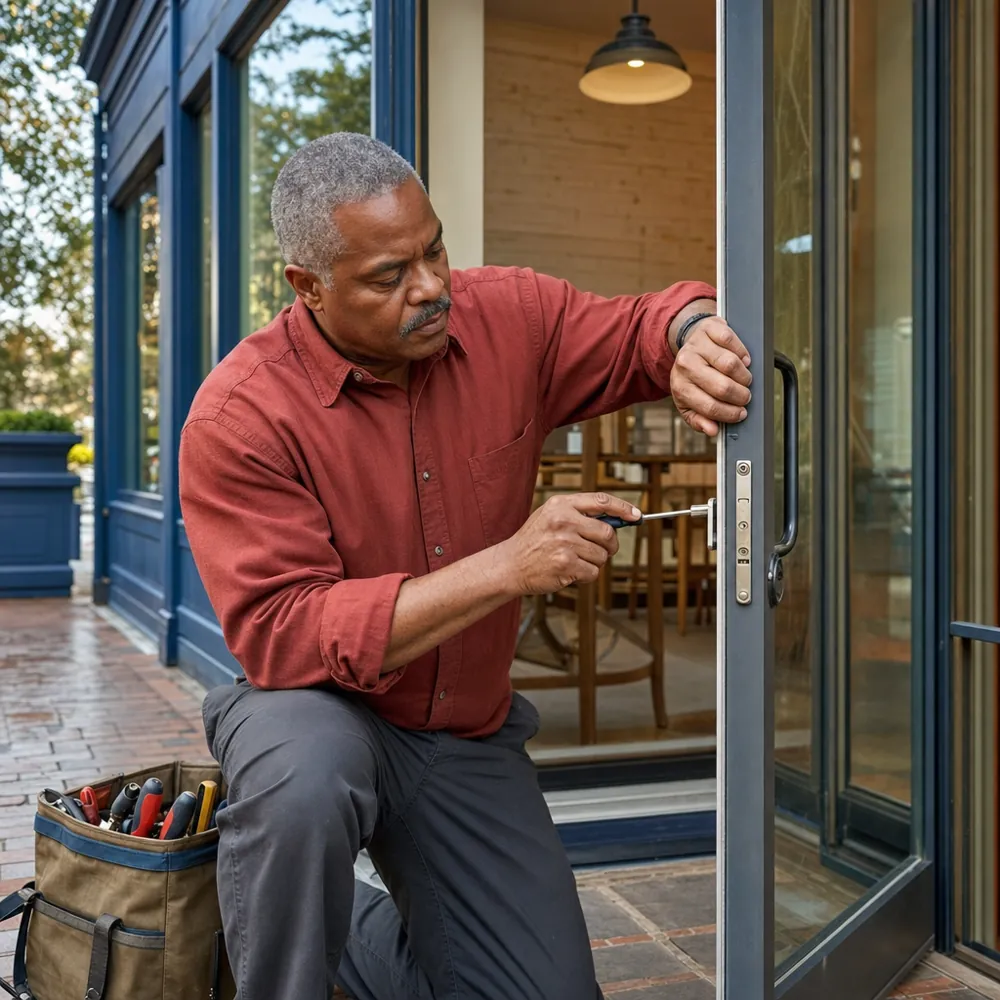
At the door, we open the lock and work on the hardware that is actually causing the trouble. On a business entrance, that can mean pulling the cylinder, resetting a rim or mortise setup, or changing the keying so a master key and change key do not fight each other. On exit hardware, we check the latch movement and the retraction point, then adjust the parts that keep the mechanism from moving freely. In Mount Joy Township and nearby Ephrata, that work stays on the lock itself.
What changes afterwards
When the work is finished, the lock has a different cylinder or a different keying pattern, and the key that was causing trouble no longer matches the old setup. If we rekeyed the hardware, the pins and cuts now match a new key pattern inside the cylinder. If we replaced a cylinder, the body of the lock stays in place while the core changes the way the key enters and turns. On a master key system, the change alters which key fits which lock and how the hardware responds.

Commercial Locksmith, in short
Locks, cylinders, master keys and exit hardware on business premises.

Worth knowing
Wear starts in the places people do not see: the key blade rounds off, the plug gets dry, and the cylinder housing picks up grit at the face where the key enters. A key can still slide in while the inside edges drag more each month, and the change is easy to miss until the turn gets stiff. We pull the cylinder, inspect the plug and shell, clear the buildup, and replace parts that have taken a set from years of use in Mount Joy Township.
On a master key setup, the slow wear shows up in more than one lock at once because the same doors are being used with different keys every day. The master key may start to scrape at the top of the keyway, while the operating key leaves polished spots on the plug and the cylinder body. We take the cylinder out of the lock, check the key cuts against the wear marks, clean the parts, and replace a worn core or housing when the turning surfaces no longer meet cleanly.
Exit hardware can hide the problem until the latch side starts to drag and the key will not finish its turn in the rim or mortise cylinder. Dust, metal wear, and dried residue collect around the spindle, cam, and cylinder tailpiece, and the key has to fight that buildup every time it moves. We remove the cylinder, inspect the cam and tailpiece for wear, clean the parts that bind, and fit new hardware where the old surfaces have worn smooth under the load of daily use.
Jobs we have done


Questions
My rear office door key turns, but the deadbolt on the rear office door stays stuck. What do you check first?
We check the cylinder, the bolt, and the way the hardware lines up at the door. A key that turns without moving the bolt can point to wear inside the cylinder or a problem in the lock body. We open it, then sort out whether the cylinder, lock, or exit hardware needs attention.
I need a master key for the tenant doors in my warehouse, and some locks already use different keys. How do you set that up?
We set it up by working from the cylinders already on the doors and building the keying plan around them. Some locks can be keyed alike, some can stay separate, and the master key can be organized to fit the way the building is used. We handle the cylinders and the keying together.
The panic bar on my side exit sticks after people push it all day. What part usually causes that?
We look at the exit hardware first, then the latch and the way the door closes against the lock. A sticking bar can come from worn parts inside the hardware or from a latch that is not moving cleanly. We open the hardware, inspect the moving parts, and replace what no longer works right.
My office door sticks in my older building, but a newer suite nearby has the same lock problem. What changes for you?
The older door may add wear at the latch and more side-to-side play in the hardware, so we look at the lock body and the fit of the keyway together. On a newer door, the issue is often tighter hardware with less wear showing, so the work can focus more on the cylinder and the way the key turns.
My back entrance key turns rough in an older warehouse, but a newer unit has a similar issue. What changes there?
In the older warehouse, the rough turn may come from years of use in a mortise or rim lock, so we check the cylinder and the housing together. In the newer unit, the same complaint often points to a bored cylindrical lock with less wear around it, which changes how we assess the cylinder and the key.