




Prospect Park
Locks and keys for a Prospect Park business? We come to you
Cylinders, master keys and exit hardware on business doors, worked on at your premises.

Where
Prospect Park
What we cover
Delaware County, Pennsylvania
How we work
We are a mobile locksmith. We come to you.
The call
A call about a business lock in Prospect Park usually starts after the key turns hard, the latch drags, or the exit hardware does not release the way it should. The caller has often already tried a spare key, a bit of movement in the cylinder, or opening and closing the door a few times. We ask what type of lock is on the door, whether it is a rim cylinder, a mortise case, or a bored cylindrical lock, and whether master key work is involved. That tells us how we come to the site and what we bring into view.
What we check first
Before we touch the hardware, we check the door position, the keyway, the cylinder face, and the exit device or lever trim if one is present. We also look at how the lock is mounted and whether the problem sits in the cylinder, the latch, or the keyed side of the hardware. In Prospect Park, that first inspection decides whether we open the lock as found, remove a cylinder, or adjust the lock body after it is open. A worn master key pattern calls for a different approach than a damaged cylinder.
The work itself
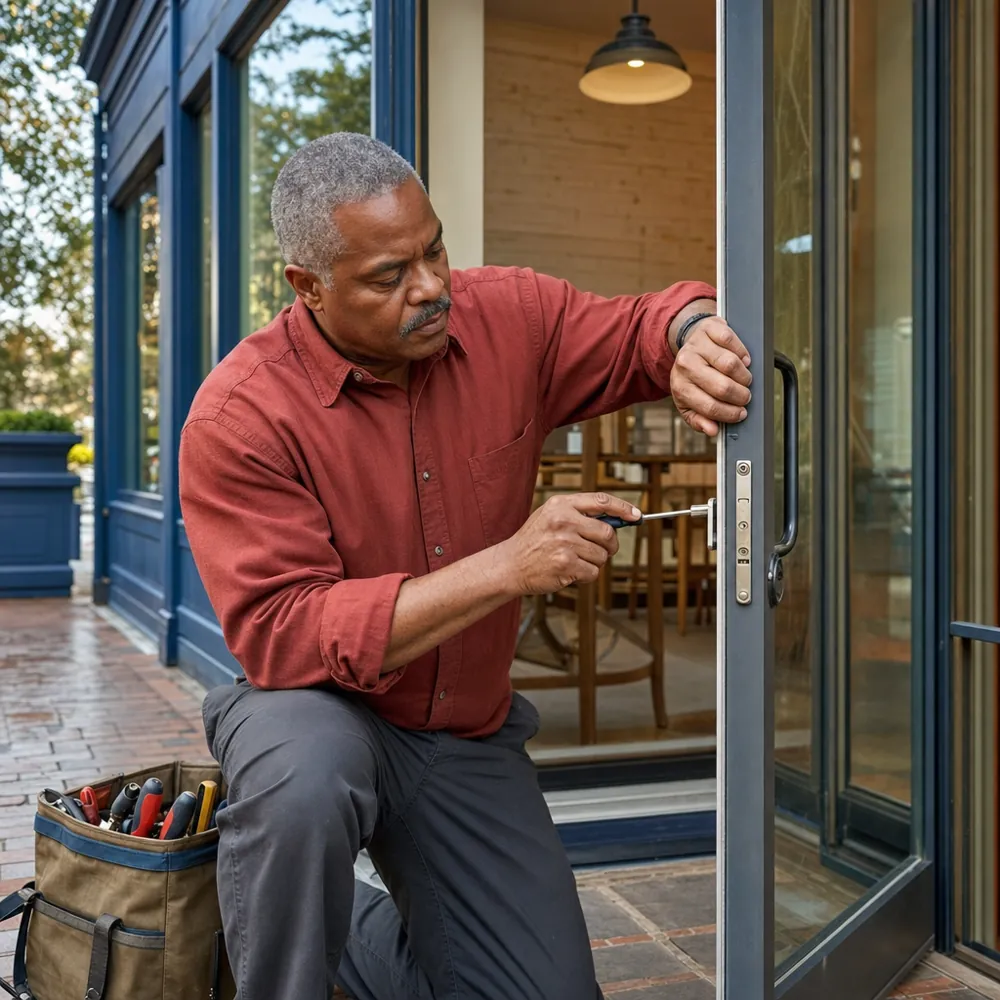
At the door, we work on the lock as it sits on the business premises. We open the lock, remove or reset the cylinder when that is the right part to address, and set the keyed parts back in position. If the job involves exit hardware, we check the release point and the latch movement before closing it up again. On a mortise or rim lock, we stay with the hardware itself rather than the door surface. In Prospect Park, the work stays focused on the lock body, the cylinder, and the keyed mechanism.
What changes afterwards
Once the work is finished, the change is in the hardware itself. A replaced cylinder means the keyway is new, while the lock body or exit device may have been adjusted so the moving parts sit where they should inside the case. On a master keyed lock, the bitting that belongs to the new keying pattern is what changes, and that changes which keys are meant to operate it. The adjusted parts move with less bind, and the keyed side of the lock presents a different feel in the cylinder.
About Prospect Park
Prospect Park has convenient rail service, and Prospect Park Station is on the SEPTA Wilmington Newark Line.
Commercial Locksmith, in short
Locks, cylinders, master keys and exit hardware on business premises.

Worth knowing
People expect a commercial lock to be a simple cylinder change, but the first surprise is usually the amount of small hardware that has to be matched by hand. A rim cylinder has to line up with the tailpiece and housing. A bored cylindrical lock may need the knob set, latch, and keyed side checked together. On a mortise lock, the case, cylinder, and cam all have to fit the body already in the door. In Prospect Park, that can mean opening the lock, taking it apart enough to read the wear, and setting the pieces back with the right movement in the plug.
Master key work also surprises people because it is not just making one key fit one lock. The expected part is a quick duplicate, but the actual work is inside the cylinder and the keying plan. We check which locks are meant to stay keyed alike, which need a separate key, and whether the existing core can still be keyed into the system. On a business door, the surprise is that a small change at the cylinder can affect who can turn the lock, while the exterior hardware stays the same.
Exit hardware catches people in a different way because they expect the bar or paddle to be the only part that matters. What we actually check is the latch, the trim, the cylinder where there is one, and the way the device releases the door. A loose spindle, bent tailpiece, or worn latch parts can change how the unit moves. The work is in the small pieces behind the face of the hardware, where the push bar, trim, and lock body all have to line up on the door.
Jobs we have done


Questions
My office suite mortise lock is sticky after the key turns halfway. What do you check first?
We check the cylinder, the latch, and the condition of the key before anything is adjusted. A sticky mortise lock can come from wear inside the lock body or from a key that no longer matches the pins cleanly. We open the lock, inspect the parts, and decide whether repair or replacement fits the hardware.
The front glass door at my store uses a rim lock, and the key only works from one side. Why would that happen?
We look at the cylinder and the interior trim because one-sided key action can point to a worn cylinder, a loose tailpiece, or a lock that was installed with the wrong handing. We open the lock, check how it sits on the door, and see whether the rim hardware needs repair or replacement.
My back entrance bored cylindrical lock has a key that sticks after lunch rush, so what should I expect you to do?
We inspect the cylinder, the latch, and the key cut to see where the binding starts. Heat, wear, and repeated use can change how a bored cylindrical lock feels by the end of the day. We open the lock, test the key in the cylinder, and separate a key issue from a lock issue.
When my side door still sticks after the first try, how do you decide what to change?
We look at what is binding and change the approach based on that. If the cylinder is the issue, we shift to that part first; if the bolt is the problem, we work from the hardware that moves it. We keep the work on the lock, the key, and the door, and we adjust only after we see what is not giving.
If my office key turns once and then stops, what do you try next?
We change the method based on the feel of the lock and the way the key is moving. A key that turns and hangs up can point to a worn cylinder, a misfit key, or a problem in the exit hardware. We test the next step from there and keep the work on the lock and the key.