




Rutledge
Locks and keys for a Rutledge business? We come to you
Cylinders, master keys and exit hardware on business doors, worked on at your premises.

Where
Rutledge
What we cover
Delaware County, Pennsylvania
How we work
We are a mobile locksmith. We come to you.
The call
A call from Rutledge usually starts with a sticking office key, a cylinder that turns rough, or exit hardware that no longer moves the way it did earlier. The caller has often tried the key from both sides, checked whether another key works, and looked at the latch or lever for a simple snag. We ask about the lock body, the cylinder type, and whether the door has rim, mortise, or bored cylindrical hardware so we can plan the work before we come to you.
What we check first
Before we touch anything, we check how the lock sits on the door, how the key enters the cylinder, and how the exit hardware is mounted. That tells us whether the problem is in the cylinder, the mortise case, the rim lock, or the key itself. In Rutledge, that first look decides whether we are opening the lock, rekeying the cylinder, adjusting master key work, or replacing a worn part inside the hardware. We do not start by forcing anything.
The work itself
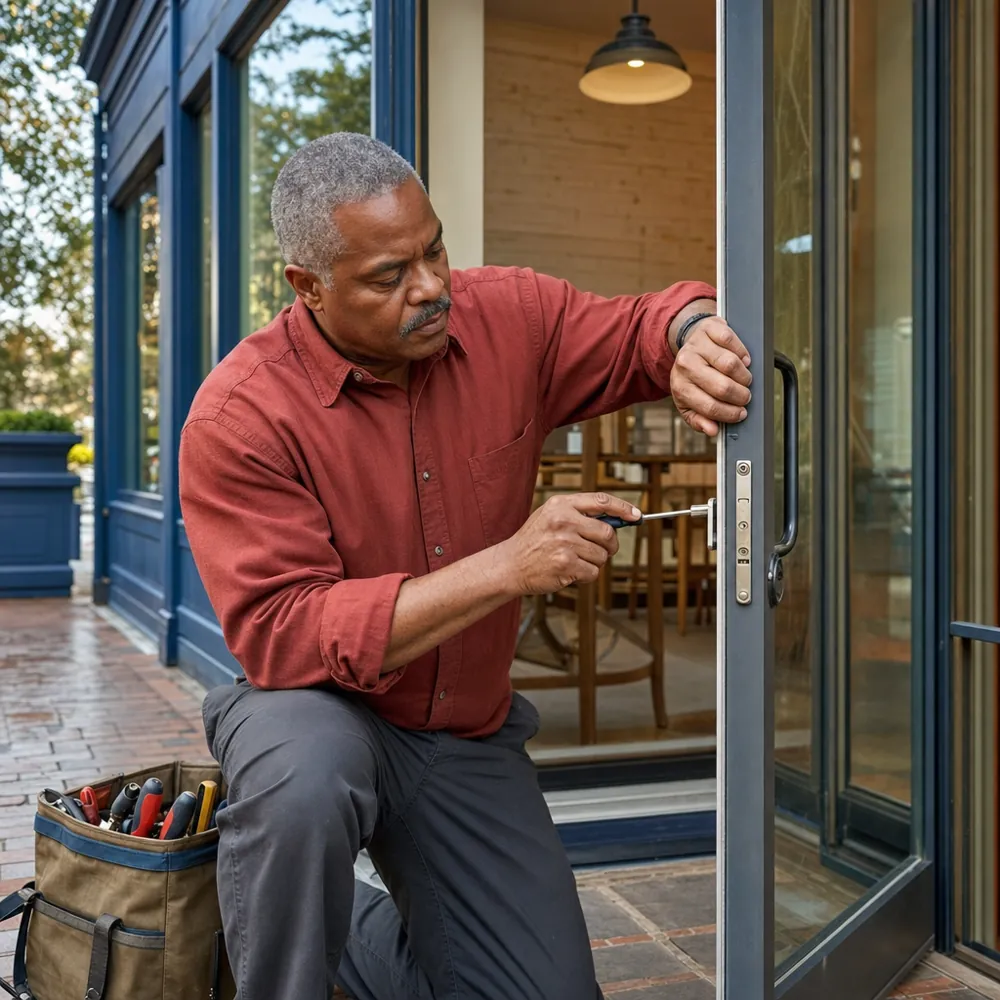
At the door or at the vehicle, we open the lock and work on the hardware in place. We remove and reset cylinders, change out worn cores, and set master keying where the lock build allows it. On exit hardware, we check the latch, trim, and cylinder connection, then make the needed adjustment so the parts move together instead of fighting each other. If the key is damaged or the cylinder is tired, we replace the affected piece and fit it to the lock on site.
What changes afterwards
After the work, the lock has a new cylinder or a fresh keying pattern, and the old wear point is no longer doing the same job. The master key changes where needed, while the operating key turns the adjusted cylinder with a cleaner feel. On Rutledge commercial hardware, that can mean a rim cylinder that sits square, a mortise cylinder that threads in cleanly, or a bored cylindrical lock with a reset core and adjusted exit trim, all set into the lock body and left at the door.
About Rutledge
Rutledge is nearly surrounded by Ridley Township and borders the borough of Morton and the community of Folsom.

Commercial Locksmith, in short
Locks, cylinders, master keys and exit hardware on business premises.

Worth knowing
A key that drags in a bored cylindrical lock is a symptom, not the whole fault. We look at the key first, then the cylinder plug, the tailpiece, and the mounting screws that hold the lock body in place. If the plug is worn or the tailpiece is rubbing, cleaning the cylinder and resetting the parts can stop the bind for a while, but the real fix is to replace the worn cylinder or failed trim parts so the drag does not keep coming back in Rutledge.
A master key problem can look like a bad key, but the cause may sit deeper in the system. We inspect the master key pins inside the cylinder, the control of each lock, and the way the cylinders are keyed within the master key setup. If a tenant key works poorly because one cylinder is worn, changing that one cylinder is not the same as sanding off the symptom. We correct the parts that no longer match, then set the master keying so the locks are matched to the actual hardware.
Exit hardware needs the same kind of thinking. A push bar that feels loose or a latch that does not retract cleanly may tempt someone to keep tightening screws or adding grease, but that only masks the fault. We check the latch, the dogging parts, the spindle, and the fasteners that hold the device to the door. If the latch spring is weak or the trim is worn, those parts get replaced instead of covered up, so the problem is addressed at the hardware and not left at the handle.
Jobs we have done


Questions
My back office door key turns, but the lock sticks on the way out in Rutledge, Pennsylvania.
We check the key, cylinder, and lock body for wear, buildup, or a shifted part that is catching on the way out. If the cylinder is tired, we can rekey it or replace it with a matching bored cylindrical or mortise cylinder, then test the key in the door and the latch.
The master key for our shop entry works upstairs, but not on the side door anymore.
We look at the master key setup, the cylinder condition, and the way the locks were keyed together, then sort out where the change happened. If one lock has drifted out of line with the rest, we can rekey the cylinder or adjust the keying pattern so the same key opens the doors that share it.
Our rear exit hardware is loose, and the latch on that metal door keeps hanging up.
We tighten and check the exit hardware, then look at the lock and cylinder to find the part that is not moving cleanly. If the latch or cylinder is worn, we can repair the issue or replace the lock hardware on the door, then test the exit trim and the lock together.
My office key turns but the side door still stays shut. How do you tell if it is the lock or the cylinder?
We check where the movement stops, then separate a latch problem from a cylinder problem by testing the key action and the door hardware itself. A key that turns but does not retract the latch can point to more than one fault, so we look at the lock body, the cylinder, and the alignment of the parts at the door.
My master key works on some doors in Rutledge, but one storage room lock sticks. How do you tell what is wrong?
We compare the same key in a working lock and the sticking one, then look for wear in the cylinder, a fault in the master keying, or a problem in the lock body. The same sticking feel can come from different causes, so we test the key, the cylinder, and the door hardware separately instead of guessing at the lock.