




Eddystone
Locks or keys to sort out in Eddystone? We come to the door
Deadbolts, cylinders, keys and strikes on your home, worked on at your own door.

Where
Eddystone
What we cover
Delaware County, Pennsylvania
How we work
We are a mobile locksmith. We come to you.
The call
A home lock in Eddystone usually reaches us after the key has been tried in more than one way, the deadbolt has been checked from both sides, and the knob or cylinder still will not turn cleanly. We hear about a key that sticks, a bolt that does not retract, or a lock that opens one time and binds the next. We come to you and listen for the condition of the lock first, because the sound and feel of the hardware tell us which part needs attention and which part should stay in place.
What we check first
Before we touch anything, we look at the lock type, the cylinder, the deadbolt body, the strike, and the pocket it meets. On a home door in Eddystone, that tells us whether the issue sits in the key side, the latch side, or the mounting hardware. We check the screws, the plate, and the alignment of the opening points, because that decides whether we are opening the lock, replacing the cylinder, resetting the strike, or tightening the mounting so the parts meet in a better line.
The work itself
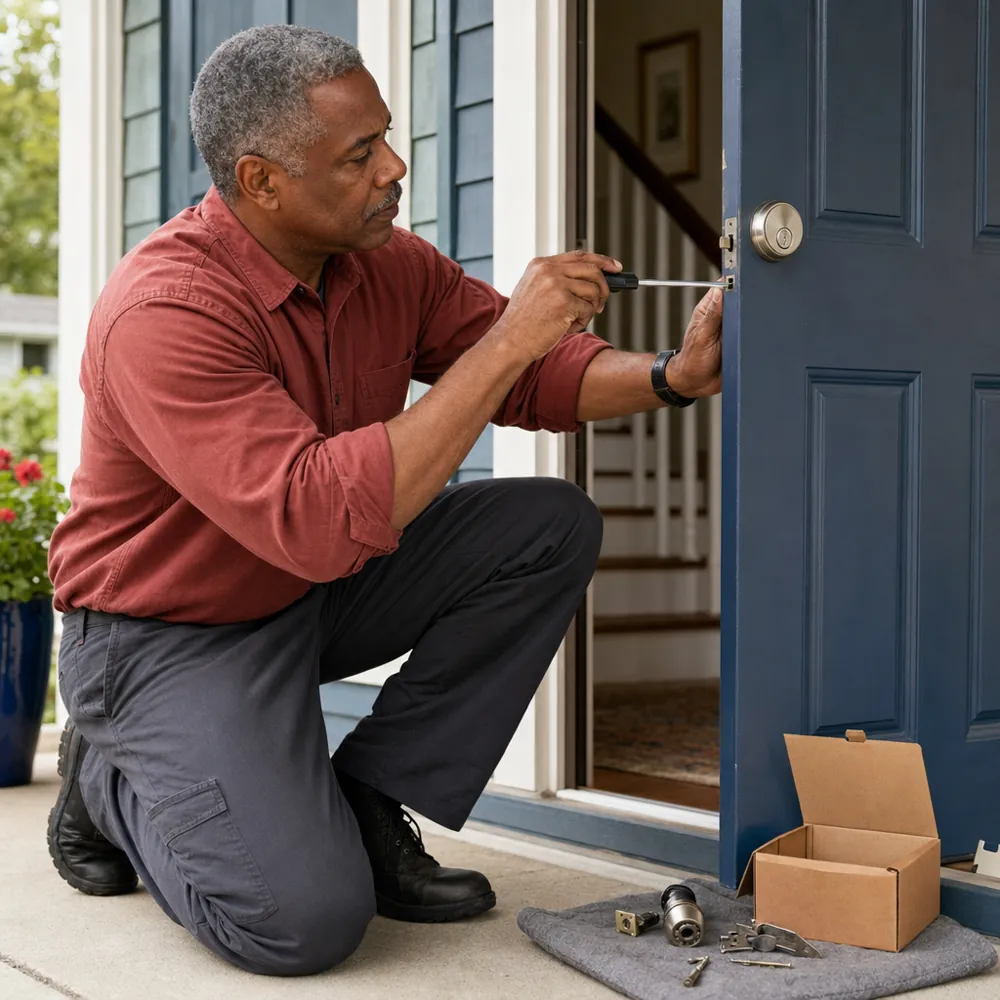
At the door, we work on the lock itself, not the door construction around it. We open the lock, remove the cylinder or deadbolt parts as needed, reset the strike plate, and replace worn screws with longer ones when the mounting has loosened. If the hardware is a rim, mortise, or bored cylindrical set, we fit each piece to the opening already there and keep the work within the lock assembly. In Eddystone, that means the focus stays on the lock, the key, and the strike.
What changes afterwards
When the work is finished, the changed part is the cylinder, the deadbolt set, or the strike hardware, and the adjusted part is the plate or screw set that holds it in line. That changes how the bolt meets the pocket, how the key turns in the keyway, and how firmly the strike stays seated. In a home lock in Eddystone, the hardware no longer depends on loose mounting or a shallow screw bite, and the lock body sits with a steadier fit against the door.
About Eddystone
Eddystone has a train station on the Wilmington Newark rail line.

Residential Locksmith, in short
Locks, cylinders, deadbolts and keys on a home, the strike and its pocket, reinforcement plates, long screws.

Worth knowing
A deadbolt that drags can point to a worn cylinder, a bent key, or a bolt that is not meeting the strike squarely. We check the key first for twist and wear, then test the cylinder with a better-cut key to see whether the plug turns cleanly. If the key is fine, we look at the bolt throw and the strike pocket, then compare the latch edge to the reinforcement plate and long screws. That tells us whether the issue is in the lock parts or in the way the door is meeting the frame in Eddystone.
A key that goes in but does not turn may be blamed on the lock, yet the cause can be a bad key cut, dirt in the cylinder, or internal wear in the rim or mortise body. We compare the key to the cylinder profile, test the movement with the door open, and watch whether the bolt is binding because the strike is pulling it sideways. If the same symptom stays with one key and leaves with another, the key is the issue. If it stays with the lock, the cylinder or lock body gets checked next.
A door that feels locked when it is not can come from a bolt that is not reaching full throw, a strike set too deep, or a long screw that has loosened and let the plate shift. We open the lock, then watch the bolt enter the strike and note whether it is stopping short, rubbing the edge, or hitting the pocket at an angle. That tells us whether the fix is in the cylinder, the deadbolt, or the reinforcement plate. The parts have to be checked against each other, not guessed at, at the door and strike area.
Jobs we have done


Questions
My front deadbolt in Eddystone turns hard after the key goes in; what do you check first?
We check the cylinder, the key cut, and the deadbolt alignment first. A stiff turn can come from worn parts, dirt in the cylinder, or a strike that sits off. We also look at the screws and reinforcement plate, since loose hardware can let the lock shift and bind at the door.
I lost the key to my back door in Eddystone; do you need to replace the whole lock or just the key?
We do not need to replace the whole lock every time. If the cylinder is in good shape, we can open it and then make a new key for it or rekey the lock, depending on the hardware on the door. That lets us keep the existing deadbolt and strike in place.
My side door latch catches on the strike in Eddystone when I close it; can that be adjusted without carpentry?
Yes, if the issue is the strike or its pocket, we can often correct it with the hardware already there. We adjust the strike, check the screws, and reinforce the mounting if needed. If the door edge or frame needs planing or trimming, that is outside our work, so we stay on the lock and strike hardware.
When my front deadbolt in Eddystone jammed, would a house job be handled differently than a store door?
Yes. At a house, we work on the deadbolt, cylinder, strike, and reinforcement plate tied to that door. At a business, the same kind of lock problem can involve heavier use and a different lock setup, so we check how the lock, strike, and screws sit in the door and frame before we open the lock.
If my back key only turns halfway, what changes when the same issue is on a business door?
The lock layout is often different. On a house, one key may work a single deadbolt or a small set of locks. On a business door, the key and cylinder can be part of a wider set of entry locks, so we look at the key, the cylinder, and how that door is keyed before we open the lock.